
Electrical Technology (Electrician) at a Glance
Dallas College offers many different ways to reach your career goals. Whether you want to jump into the workforce quickly or spend more time building advanced skills, we have the programs that fit your needs and timeline.
Certificate Programs
Estimated total tuition cost2:
$1,188-$8,640
Estimated time to complete1:
2 months-1 year
Courses offered at: Cedar Valley, Eastfield, and North Lake 3
Associate Degrees
Estimated total tuition cost2:
$5,940
Estimated time to complete1:
2 years
Courses offered at: Cedar Valley, Eastfield, and North Lake 3
Which Degrees and Certificates are Right for Me?
Workforce Training
Dallas College offers fast, flexible credentials designed with local employers to help you quickly start or advance your career.
Estimated tuition total: $8,640 for in-county residents
Estimated time to completion: 1 year for full-time students
Estimated tuition total: $5,184 for in-county residents
Estimated time to completion: 6 months for full-time students
Learn more about CE Electrical Technology Pre-Apprentice Certificate
Estimated tuition total: $2,016 for in-county residents
Estimated time to completion: 2 months for full-time students
Estimated tuition total: $2,808 for in-county residents
Estimated time to completion: 4 months for full-time students
Can I Get a Job?
Dallas College offers a variety of certificates and degrees to help you gain the skills you need to start working right away.
- These credentials are often considered Career and Technical Education (CTE).
- These credentials are established with the assistance and cooperation of representatives from local business, to meet local and regional employment needs.
- Higher-level certificates and degrees will typically lead to a higher salary in the workforce.
- Workforce (CE) certificates can often be completed faster than traditional credit certificates but typically do not offer college credit.
- Level 1, Level 2, Enhanced Skills certificates and others offer college credit and are often stackable to help you build skills as you work toward an associate degree.
- Workforce credentials may give you college credit at Dallas College, but they may not transfer to other colleges or universities.
If you're unsure if this is the right path for you, you can talk to a pathway specialist for advice.
Pathway Specialist
- 972-669-6400
- AskMIT@DallasCollege.edu
Credit Certificates
Dallas College offers credit certificates that provide focused, career-ready skills recognized by employers.
Estimated tuition total: $2,673 for in-county residents
Estimated time to completion: 8 months for full-time students
Learn more about Commercial Electrical Technology Certificate
Estimated tuition total: $1,188 for in-county residents
Estimated time to completion: 4 months for full-time students
Learn more about Commercial Electrical Technology Occupational Skills Award
Estimated tuition total: $1,782 for in-county residents
Estimated time to completion: 8 months for full-time students
Estimated tuition total: $1,188 for in-county residents
Estimated time to completion: 4 months for full-time students
Learn more about Rising Electrical Technician Occupational Skills Award
Can I Get a Job?
Dallas College offers a variety of certificates and degrees to help you gain the skills you need to start working right away.
- These credentials are often considered Career and Technical Education (CTE).
- These credentials are established with the assistance and cooperation of representatives from local business, to meet local and regional employment needs.
- Higher-level certificates and degrees will typically lead to a higher salary in the workforce.
- Workforce (CE) certificates can often be completed faster than traditional credit certificates but typically do not offer college credit.
- Level 1, Level 2, Enhanced Skills certificates and others offer college credit and are often stackable to help you build skills as you work toward an associate degree.
- Workforce credentials may give you college credit at Dallas College, but they may not transfer to other colleges or universities.
If you're unsure if this is the right path for you, you can talk to a pathway specialist for advice.
Pathway Specialist
- 972-669-6400
- AskMIT@DallasCollege.edu
Associate Degrees
Dallas College's associate degrees provide a strong academic foundation for career entry or transfer to a four-year institution.
Estimated tuition total: $5,940 for in-county residents
Estimated time to completion: 2 years for full-time students
Can I Transfer?
Our Associate of Applied Science degrees and certificates may not fully transfer to a four-year college or university.
- If your goal is to transfer, you may want to explore our Core Curriculum and Transfer Pathways.
- You may also want to explore a transfer degree, like an Associate of Arts or Associate of Science.
- The classes you take will count towards a bachelor's degree and are designed to be accepted by any public college or university in Texas.
If you're not sure if this is the right choice for you, you can talk to a Pathway Specialist for guidance.
Pathway Specialist
- 972-669-6400
- AskMIT@DallasCollege.edu
Questions About Degrees and Certificates?
We know applying to college can be confusing. If you are not yet a Dallas College student, you have a whole team of recruitment coaches to help guide you through programs and the enrollment process.
Current students, contact your success coach (advisor) who can answer any questions you have about Electrical Technology (Electrician) programs and your degree and certificate options.
Contact a Recruitment Coach
What Can I Earn? Will There Be Plenty of Jobs?
Workers who know how to install and repair electrical equipment are in need, and the demand is only expected to grow. Check out a few of the incredible career opportunities you’ll be ready for. Your future starts here!
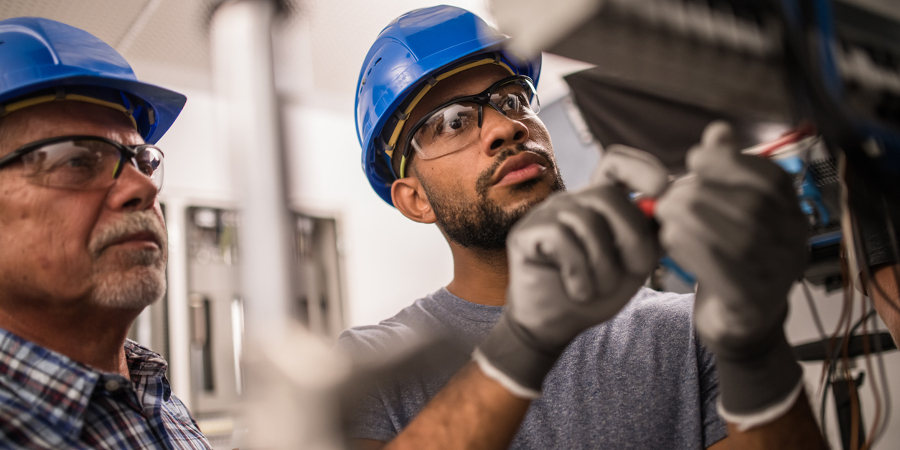
Electrical and Electronic Engineering Technicians
Median Salary
Job Openings

Projected Outlook
Top Skills:
- Reading Comprehension
- Critical Thinking
- Active Listening
- Troubleshooting
- Repairing
- Complex Problem Solving
- Speaking
- Writing
- Active Learning
- Monitoring

Electrical and Electronics Repairers for Commercial and Industrial Equipment
Median Salary
Job Openings
Projected Outlook
Top Skills:
- Repairing
- Operations Monitoring
- Quality Control Analysis
- Troubleshooting
- Equipment Maintenance
- Critical Thinking
- Complex Problem Solving
- Judgment and Decision Making
- Reading Comprehension
- Active Listening
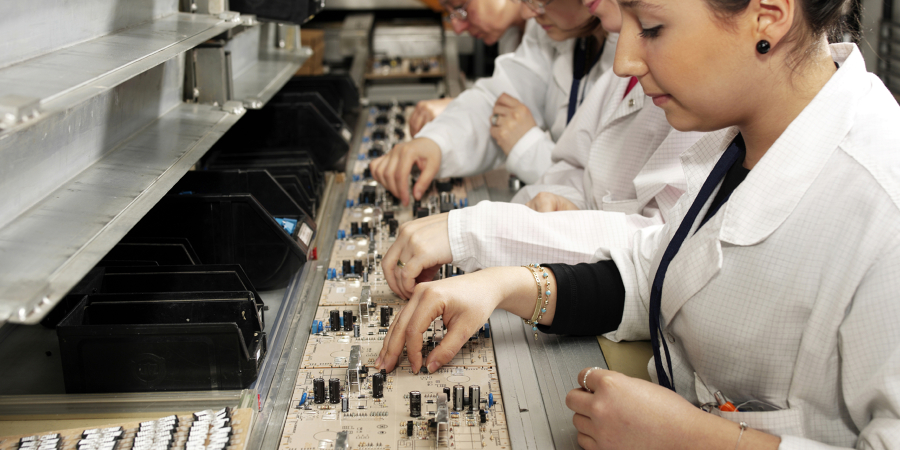
Electromechanical Equipment Assemblers
Median Salary
Job Openings
Projected Outlook
Top Skills:
- Quality Control Analysis
- Operations Monitoring
- Troubleshooting
- Reading Comprehension
- Critical Thinking
- Speaking
- Monitoring
- Active Listening
- Time Management
- Judgment and Decision Making
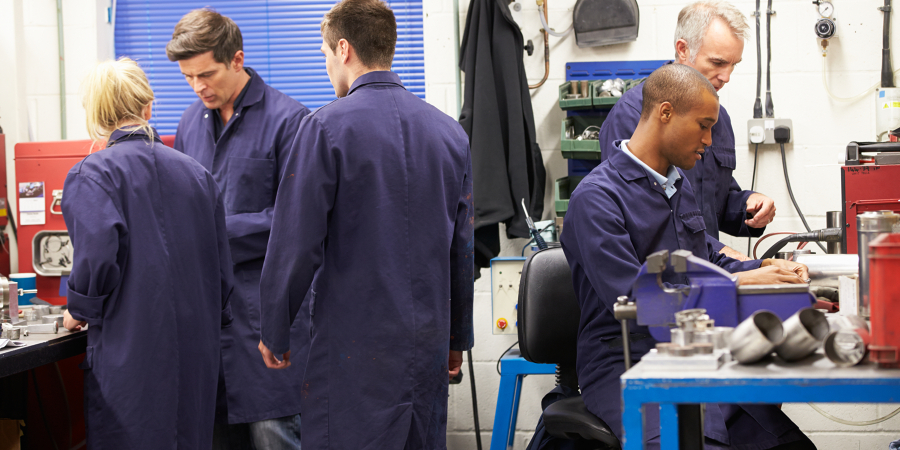
Non-Destructive Testing Specialists
Median Salary
Job Openings
Projected Outlook
Top Skills:
- Quality Control Analysis
- Reading Comprehension
- Active Listening
- Critical Thinking
- Monitoring
- Active Learning
- Operations Monitoring
- Writing
- Learning Strategies
- Mathematics
All jobs data gathered for Dallas/Fort Worth. Source: Dallas College Labor Market Intelligence and Lightcast4.
“My advice to anyone wanting to pursue a career as an electrician is to leave your mind open and soak in as much as you can. There’s no way you can know everything about this profession. Take as many classes as you can and learn as much as you can from people and their experiences.” Read Josh Embry's story.
/prod01/dc1-cdn-pxl/media/dallas-college/content-assets/images/students/profiles/JoshEmbry-464X464.jpg)
Find Out More About Dallas College
Sign up to receive additional information about Dallas College or call 972-669-6400.
School of Manufacturing and Industrial Technology
- 214-378-1560
- AskMIT@DallasCollege.edu
Dallas College
- Voice: 972-669-6400
- Text: 217-472-4745
- Email: StudentHelp@DallasCollege.edu
/prod01/dc1-cdn-pxl/media/dallas-college/content-assets/images/banners/areas-of-study-banners/manufacturing-and-industrial-technology/aviation.jpg)
/prod01/dc1-cdn-pxl/media/dallas-college/content-assets/images/banners/areas-of-study-banners/manufacturing-and-industrial-technology/electronics-electro-mechanical-900X600.jpg)
/prod01/dc1-cdn-pxl/media/dallas-college/content-assets/images/banners/areas-of-study-banners/manufacturing-and-industrial-technology/dronetech.jpg)
/prod01/dc1-cdn-pxl/media/dallas-college/content-assets/images/banners/areas-of-study-banners/manufacturing-and-industrial-technology/welding-900X600.jpg)
1Length of time is based on catalog degree plans. Prerequisites may be required, which are not included in this estimate. For most programs, full-time student status is assumed, a minimum of 12 credit hours per semester.
2Cost for credit courses is based on tuition rates for program hours for Dallas County residents. The price of most required learning materials (books, software, supplies, etc.) is included with the price of tuition. Certain programs may have additional costs above the standard tuition. Continuing Education courses may vary by program. Please review the Area of Study Overview and/or the Health Information Packets for additional costs and details. Visit our Paying for College site to learn more about cost, financial aid, scholarships and more.
3Each location offers a unique combination of certificate and degree options. Not all degree and certificate offerings are available for admission/start at all campuses every semester.
4A portion of Lightcast’s data comes from O*NET Online by the U.S. Department of Labor, Employment and Training Administration (USDOL/ETA). Used under the CC BY 4.0 license. O*NET® is a trademark of USDOL/ETA. Lightcast has modified all or some of this information. USDOL/ETA has not approved, endorsed, or tested these modifications.
HB1508 Notice
This program may lead to an occupational license for which a prior criminal history may make a student ineligible.
For more information, please visit DallasCollege.edu/HB1508.