
College-Going Rates: Dallas in National Context
/prod01/dc1-cdn-pxl/media/dallas-college/content-assets/images/about-dallas-college/research-institute/College_Going_Student_Photo.svg)
Navi Dhaliwal and Dillon Lu
Insight Brief - Published October 8, 2025
Introduction
In recent years, Dallas-area school districts, colleges and universities like Dallas College, and organizations like Commit, Dallas County Promise, and Economic Mobility Systems have all sought to increase the number of young people enrolled in higher education, in hopes that more youth will develop skills and earn credentials that help them earn living wages, support themselves and their families, and achieve upward economic mobility. In this brief, we use data to explore the progress of these efforts, illuminating how recent cohorts of Dallas-area high school graduates are faring after high school, describing their enrollment and employment, and benchmarking their outcomes in national context.
Sidebox 1: Defining Dallas-Area High School Districts
In this brief, we focus on a set of 21 public high school districts within Dallas College’s service region, not just Dallas County or the Dallas Independent School District. These include Carrollton-Farmers Branch, Cedar Hill, Coppell, Dallas, DeSoto, Duncanville, Ferris, Forney, Garland, Grand Prairie, Highland Park, Irving, Lancaster, Lewisville, Mesquite, Midlothian, Northwest, Red Oak, Richardson, Rockwall, and Sunnyvale independent school districts. We also include Richland Collegiate High School, a charter school / district serving fewer than 300 students but located on Dallas College’s Richland Campus. Notably, Plano and Fort Worth independent school districts are excluded, as they feed more high school completers into Collin College and Tarrant County College, respectively. All of the districts included in this brief have sizable high school graduate populations who enroll at Dallas College.
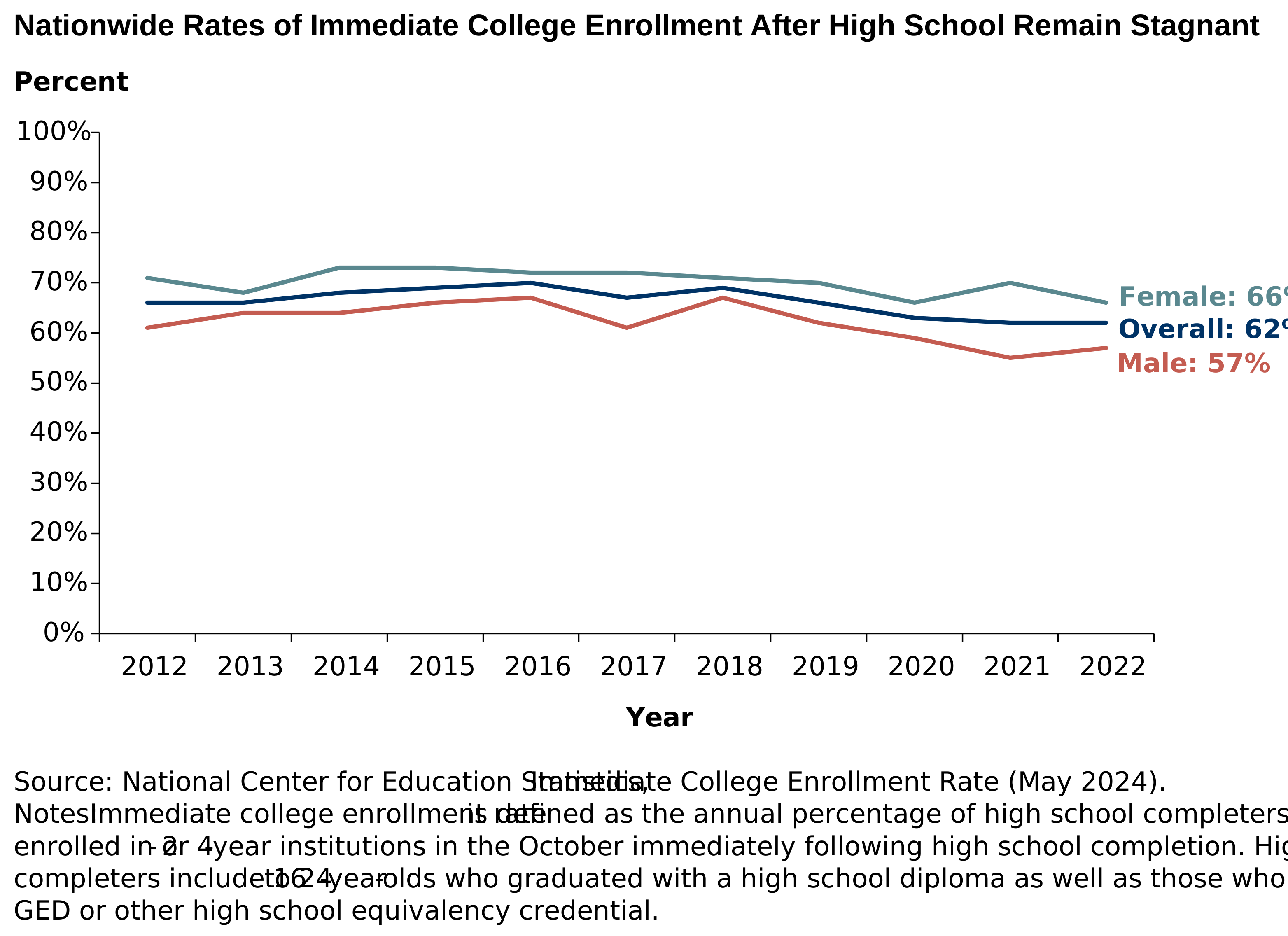
Nationwide, immediate college enrollment rates of high school completers, or the percentage who enroll in higher education institutions in the October immediately following high school graduation, were stagnant from 2012 to 2022, with post-pandemic declines erasing small gains from 2012 to 2018 (Figure 1). During this decade, according to data from the National Center for Education Statistics (NCES), female students consistently had higher rates of immediate college going than male students, and rates were not measurably different for Asian, Black, and White students when comparing 2012 to 2022, but Hispanic students saw a significant decline from 70% in 2012 to 58% in 2022. These numbers not only underscore the challenge of expanding college access, but the difficult task of raising demand and making college an appealing option after high school graduation, especially among male students and underrepresented minority students.
Figure 1
Trends by Income Level
While the most recent federal report on immediate college going from the NCES shows national trends through 2022, data from the National Student Clearinghouse (NSC), an educational nonprofit with wide coverage of postsecondary enrollment, cover the high school graduating classes of 2023 and 2024. Studying more recent trends helps us understand the extent to which pandemic-era outcomes were transitory and offers an initial look at the potential disruptive effects of educational and labor market changes driven by technology and policy disruptions, like the emergence of AI or changes in federal resources for education. Additionally, the NSC also disaggregates outcomes by high school characteristics, such as urbanicity and high / low rates of poverty, income level, and underrepresented minorities.
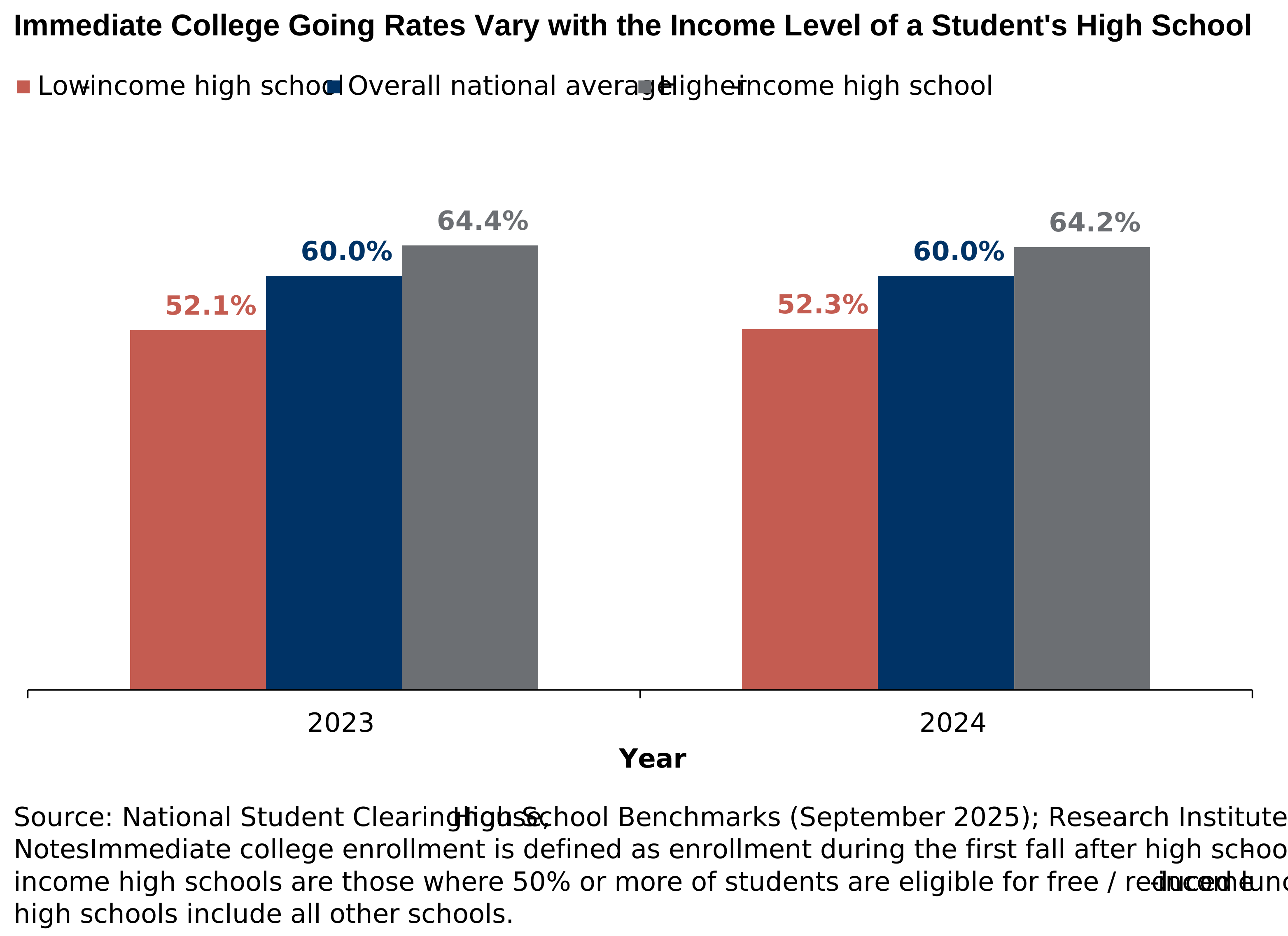
Overall, NSC data show similar results as can be seen in NCES trends through 2022. Immediate college going rates were around 60% in both 2023 and 2024, though with large disparities across lines of poverty, income, and race/ethnicity. Low-income high schools, where the majority of students are eligible for free or reduced lunch, posted an average immediate college going rate that fell around 12 percentage points below the average rate at higher-income schools (Figure 2). The NSC notes that this gap is closing when checking for enrollment further out—within one to two years of high school graduation instead of immediately—but it is still more than 10 points.
Figure 2
Within the Dallas area, while it varies by district, a high percentage of high school students are underrepresented minorities, come from low-income households, and face broad barriers to postsecondary enrollment and attainment. For example, according to Dallas Independent School District’s My Data Portal website, as of September 2025, more than 90% of students enrolled across all Dallas ISD schools are Black or Hispanic and around 75% are economically disadvantaged. Many students in the Dallas area juggle competing time demands, work to contribute earnings to their households, or assist with the care of children, siblings, and parents, all of which can contribute to challenges in regional college going and attainment.
Zooming in on Dallas
For a closer look at the Dallas area, we use data from the Texas Education Research Center (ERC), a state longitudinal warehouse with records from the NSC, Texas Education Agency (TEA), Texas Higher Education Coordinating Board (THECB), and Texas Workforce Commission (TWC). Overall, we find college going rates that slightly lag the national average for the class of 2022, and we estimate this trend to continue for the class of 2023, for which we are still awaiting NSC data on out-of-state enrollment (Figure 3). We check for postsecondary enrollment within one year of high school graduation, not just the fall term, and, for the Dallas-area class of 2022, we find a rate of 59% (44% in-state and 15% out-of-state)—compared to a 63% within one year overall college-going rate in national NSC data. The Dallas-area lags national average one-year college going rates for urban high schools (62%), matches rates for schools where at least 40% of students are Black or Hispanic (58%), and surpasses rates for low-income high schools (55%).
Figure 3
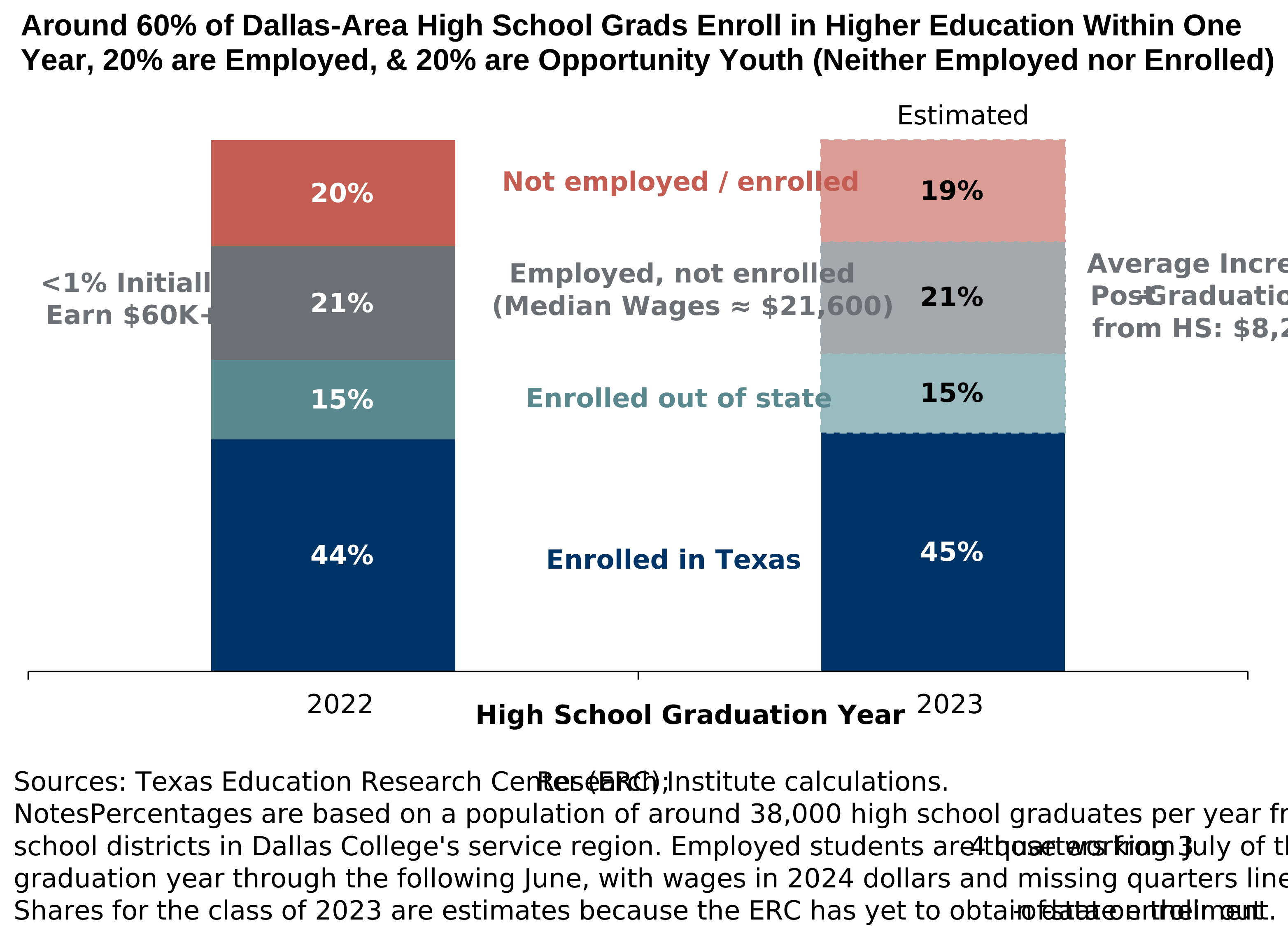
Additionally, we assessed whether students who were not enrolled in postsecondary education were instead employed within their first year after high school graduation. We counted anyone as employed if they had non-missing TWC earnings data for at least three quarters out of four from June of their graduation year to July of the following year. We note the limitation that TWC earnings data are only available for jobs where employers report to the state’s unemployment insurance system, meaning out-of-state and self-employment are excluded, and, importantly, we do not observe how many hours students work within each quarter (part-time or full-time). That said, we find 21% of high school graduates working and not enrolled in their first year after graduation, with median earnings of only $21,600. And despite a few success stories, less than 1% of all graduates were working and earning $60,000 or more. Another 20% of high school completers were not enrolled and not working (at least three quarters) within their first year after graduation. These graduates are opportunity youth, young people between the ages of 16 and 24 who are disconnected from education and employment, neither enrolled nor employed.
Opportunity Youth and Dual Credit
One lever to increase college going rates, elevate regional attainment, and reduce the share of high school graduates who become opportunity youth is to introduce students to college-level classes earlier in their educational journeys. Dual enrollment coursework, which counts toward both high school and college requirements, is one such tool, empowering students to develop a sense of self-efficacy, establish momentum, and save money by earning college credits for free while still enrolled in high school. Using ERC data for the Dallas-area high school class of 2022, we find that—relative to a 20% overall rate of graduates being neither enrolled nor employed—just 6-7% of students with a dual credit class or enrolled at an Early College High School were opportunity youth during their first year after high school graduation (Figure 4). Likewise, only 9-10% of students who graduated from Pathways in Technology Early College High Schools (P-TECH) were opportunity youth. Out of all opportunity youth in the 2022 class—around 7,600 students—just under 500 students had had some prior dual credit, ECHS, or P-TECH enrollment.
Figure 4
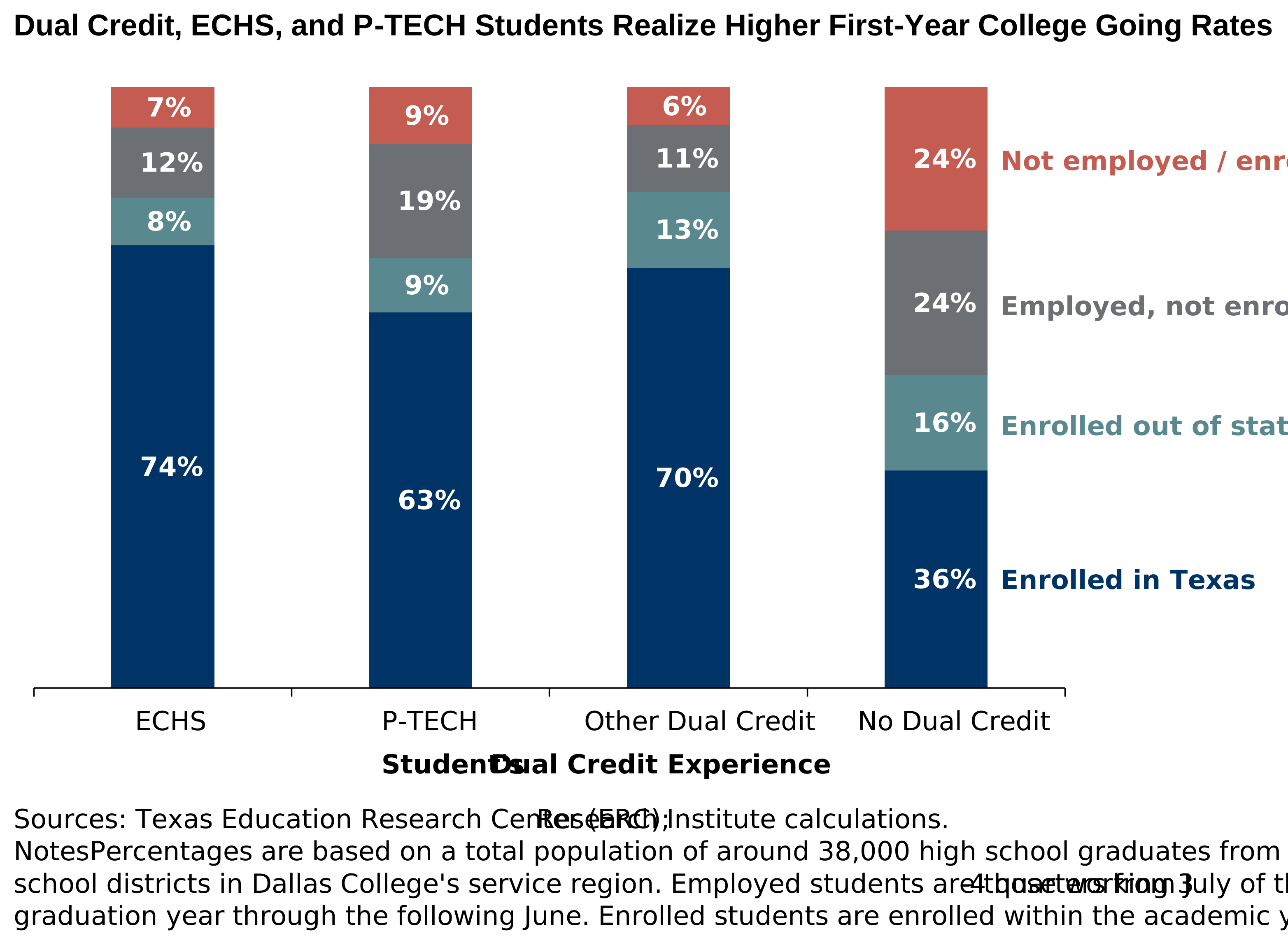
Among high school graduates who were employed and not enrolled, those from ECHS programs had median earnings of around $25,000 per year, those from P-TECH and other dual credit programs had median earnings of around $24,000 per year, and students with no dual credit experience had median earnings of around $22,000 per year. For students who had worked at least three quarters during their senior year of high school, these values amount to an $8,000-$11,000 year-over-year increase—but they still fall below living wage standards in Dallas County. Instead, the bigger success of dual credit offerings appears to be in terms of enrollment – with more than 80% of graduates with ECHS and general dual credit experience enrolled in higher education within one year of high school graduation, and more than 70% for P-TECH graduates. While there are anecdotes of students being hired with good pay straight out of P-TECH high schools, the data suggest that these cases are the exceptions and not the average outcomes, meaning immediate college enrollment should remain a point of emphasis in P-TECH programs.
Conclusion
Through innovative high school models, partnerships between school districts, nonprofits, and higher education institutions, and significant investments to support college going, the Dallas area has collaboratively strived to raise regional attainment levels, meet employer demands, and ensure more students have pathways to upward mobility. For the population it serves, the Dallas area is near to national average rates of immediate college going, but around one in five students leave high school working in low-paying jobs, with another one in five neither enrolled nor employed – at least not that can be tracked by in-state administrative employment records. ECHS, P-TECH, and general dual credit offerings are associated with better outcomes – making them important levers to close gaps and encourage enrollment – but even dual credit graduates include hundreds of students who are disconnected opportunity youth. Going forward, Dallas College and other institutions in the region must work together to ensure that these graduates, along with other disconnected youth, have a chance to be (re)connected with higher education.