
Mapping the P-TECH Landscape in the Dallas College Region
/prod01/dc1-cdn-pxl/media/dallas-college/content-assets/images/about-dallas-college/research-institute/p-tech.png)
Sayeeda Jamilah
Insight Brief - Published February 17, 2026
Introduction
Over the past two decades across the United States, educators and policymakers have developed multiple dual enrollment models to connect high school education, college pathways, and career opportunities for students with historically limited access to higher education, professional networks and social capital, and well-paying jobs. In addition to the general dual enrollment model, which offers high school students broad access to college coursework without following a structured program of study, and the Early College High School (ECHS) model, which provides a more intensive, structured academic pathway designed to support historically underserved students in earning college credit toward an associate degree alongside a high school diploma, the Pathways in Technology Early College High Schools (P-TECH) model emphasizes work-based learning through certificate and associate degree pathways aligned with high-demand industries (THECB, 2018; THECB, n.d.; TEA, n.d., ECHS; TEA, n.d., P-TECH).
Texas rapidly scaled the P-TECH high school model (Figure 1) after its early success in New York City (Rosen et al., 2023) through House Bill 3 in 2019, which provided school districts with additional funding for meeting College, Career, and Military Readiness (CCMR) goals (TEA, 2019). The Texas Education Agency (TEA) made P‑TECH and ECHS central to improving CCMR outcomes and created a certification process that helped expand P‑TECH campuses from 62 in 2019 to 312 in 2025 (TEA, n.d., P-TECH). The passage of House Bill 8 in 2023 further accelerated this growth by shifting community college funding to an outcomes‑based model that rewards dual‑credit completion and high‑demand credential attainment (Dey, 2025). Philanthropic organizations and state agencies, including Educate Texas, the Dallas Regional Chamber, major foundations, the Texas Workforce Commission (TWC), and the Texas Higher Education Coordinating Board (THECB), provided funding, partnerships, and regulatory support.
Figure 1
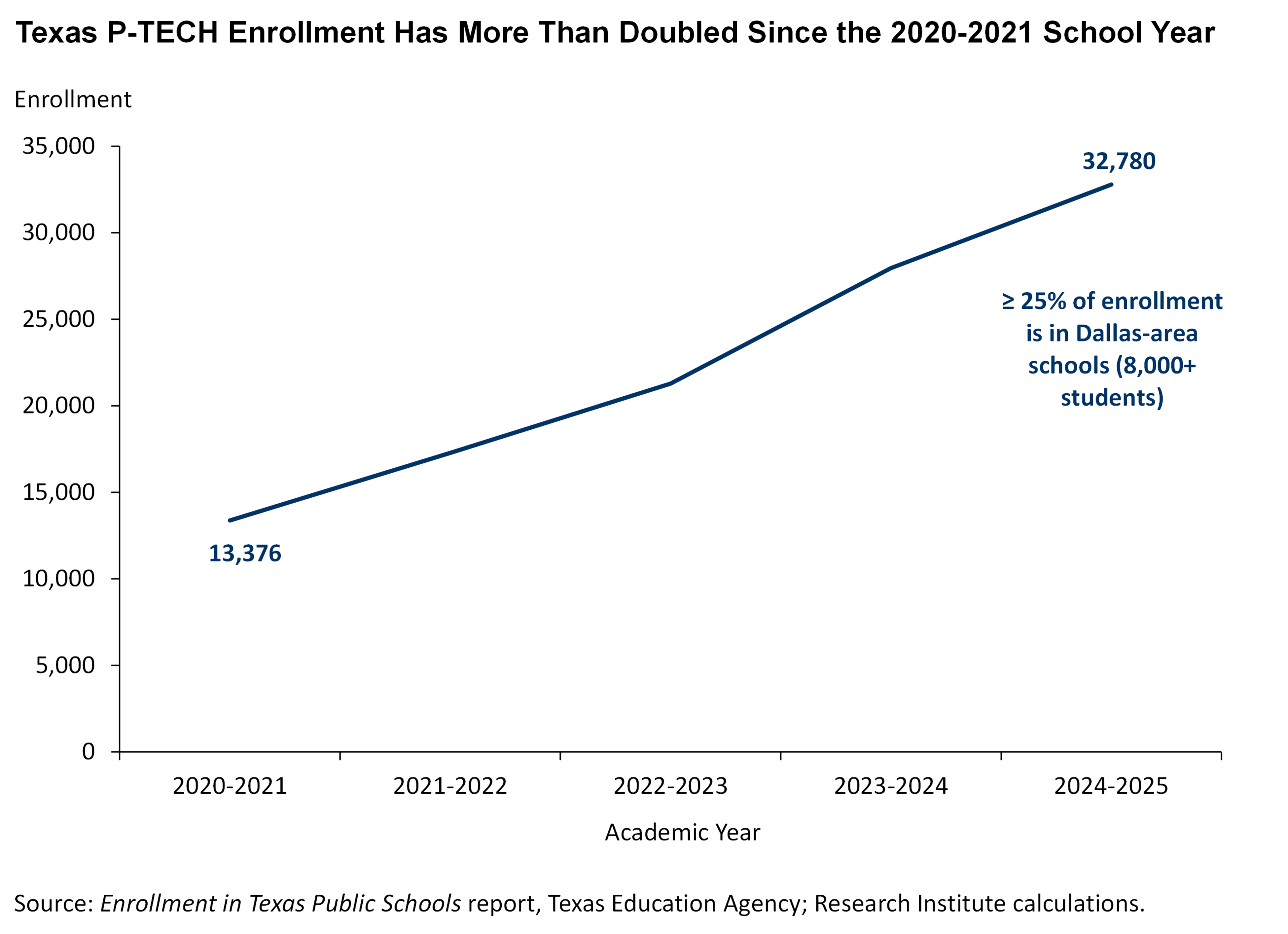
Despite this expansion, there is limited empirical evidence on whether P‑TECH programs are improving students’ academic and workforce outcomes across the many pathways the model now includes. When public resources and funds are allocated to educational programs, it is important to determine whether such programs achieve their intended outcomes, the student populations they most effectively serve, and the conditions that maximize their impact. Examining the design, implementation, and efficacy of P-TECH programs can help education leaders evaluate the strengths and weaknesses of this growing dual enrollment model amid mixed public perception of the value of college, a greater emphasis on applied, career-relevant skills in the classroom, and concerns about rising college costs. Conducted by the Research Institute at Dallas College in partnership with the Texas Schools Project at the University of Texas at Dallas, this descriptive study is the first phase of an effort to examine the postsecondary and labor market outcomes of P‑TECH students served through Dallas College; it focuses on understanding the scope, characteristics, structure, and delivery of P‑TECH pathways offered by partner school districts.
P-TECH Landscape: What We Know
Using a range of data sources including publicly available information from school district and high school websites, documents from the TEA, P-TECH pathway course maps from Dallas College’s school district partner liaison office, data from the College’s internal data warehouse, and interviews with and data requests from school district P-TECH leaders, we examined not only the range of P-TECH pathways and the number of students they serve, but also P-TECH admissions processes, enrollment counts, the credentials embedded within each pathway, the nature of district-school-industry partnerships, the experiential learning opportunities available to students, and students’ progress toward key milestones such as industry-based certifications and credential completion. Discussions with school district P-TECH leaders clarified how districts make decisions around P-TECH programming, levels of student and community demand for P-TECH pathways, and the perceived advantages and limitations of P-TECH compared with traditional high school Career and Technical Education (CTE) pathways.
Pathways Overview
Across nine school districts and 36 P-TECH high schools, a total of 182 P-TECH pathways are delivered in collaboration with Dallas College. Table 1 lists the school districts and high schools that currently have active P‑TECH partnerships with the College. Dallas Independent School District (ISD) is the largest district within the Dallas College service region and has the highest number of high schools offering P-TECH pathways, followed by Garland ISD. The remaining school districts that partner with Dallas College to provide P-TECH pathways offer a smaller selection of program options. Notably, Irving ISD, Lancaster ISD, and Mesquite ISD launched or remodeled their P-TECH programs during the 2025-2026 academic year, and, as a result, their students have not yet progressed far enough to provide complete data on work-based learning, industry certification, and credential completion for this analysis.
Table 1
Active P-TECH Partnerships and Pathways
|
Independent School District (ISD) |
Number of P-TECH High Schools |
Number of P-TECH Pathways Offered |
|
Dallas |
19 |
109 |
|
Garland |
5 |
30 |
|
Richardson |
4 |
17 |
|
DeSoto |
1 |
8 |
|
Duncanville |
1 |
4 |
|
Grand Prairie |
2 |
6 |
|
Irving |
1 |
3 |
|
Mesquite |
2 |
3 |
|
Lancaster |
1 |
2 |
Sources: Dallas College; Research Institute calculations. Note: Pathway counts are duplicated when the same pathways are offered at multiple high schools within a district.
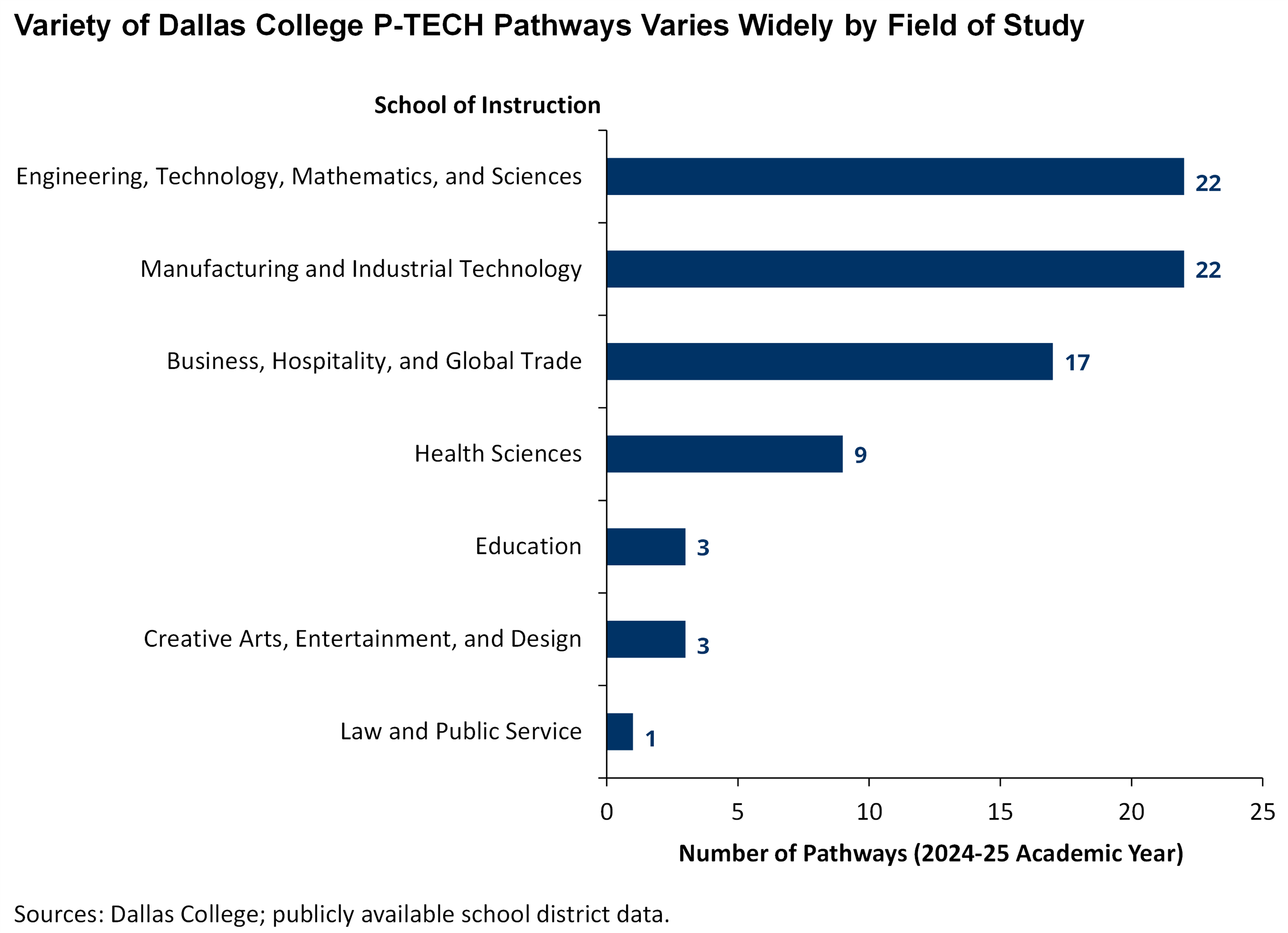
Beyond the general Associate of Arts (AA) and Associate of Science (AS) pathways, a total of 77 distinct pathways (Associate of Applied Science/AAS and Level 1 Certificate) are currently offered across Dallas College’s Schools of Instruction (Figure 2). The School of Engineering, Technology, Mathematics, and Sciences (ETMS) and the School of Manufacturing and Industrial Technology (MIT), which are the College’s most technically oriented divisions, offer the highest number of pathways with 22 options each. The Schools of Creative Arts, Entertainment, and Design (CAED) and Law and Public Service (LPS) offer the fewest P-TECH pathways, while Business, Hospitality, and Global Trade (BHGT) and Health Sciences (HS) fall somewhere in the middle in terms of the number of pathways they offer. Many AA, AS, and AAS pathways include embedded Level 1 Certificate programs and Occupational Skills Award (OSA) options.
Figure 2
Insights from District and High School Administrators
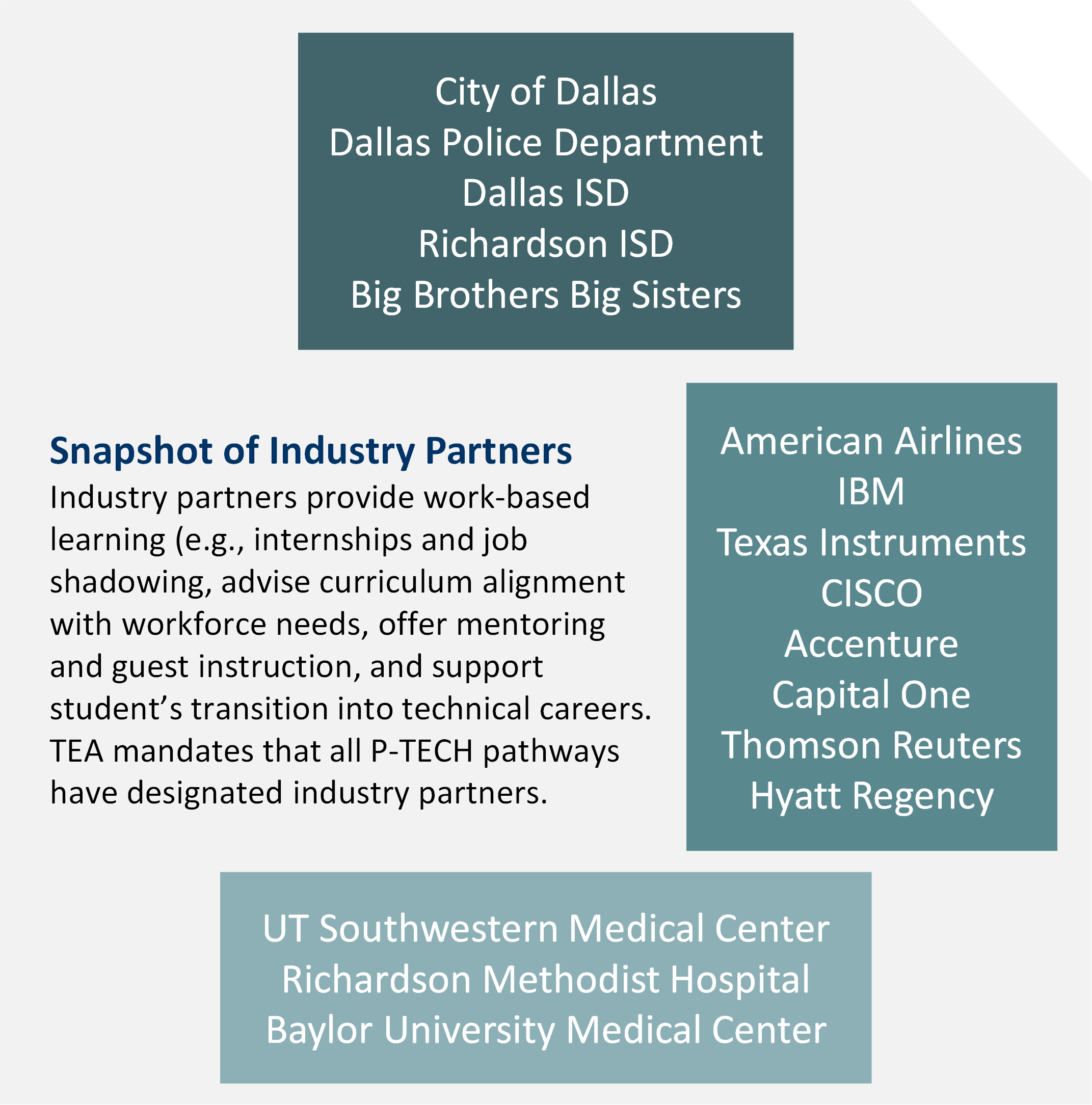
Interviews with school district leaders highlight differences in how districts design and deliver P-TECH pathways across high schools, particularly with respect to industry focus and credential offerings. Some districts support multiple pathways across a range of fields, while others offer a smaller number of pathways aligned with specific degrees or certifications. District leaders described how decisions about which pathways to offer are shaped by student interest, anticipated enrollment, and the extent to which pathways support transfer to four-year institutions. Administrators also shared that student participation varies, as some students opt for Advanced Placement or academic dual credit courses instead of P-TECH pathways. Structural features of district enrollment procedures, such as limits on school choice, often influence pathway enrollment and sustainability of programs. Leaders further discussed the operational complexity of implementing P-TECH programs, including staffing, scheduling, and compliance with state P-TECH program requirements; in fact, some administrators emphasized that traditional CTE programs can offer greater flexibility and closer alignment with local labor market needs. In terms of admissions, while most pathways follow open-enrollment, oversubscribed pathways use lotteries to determine entry into a pathway. All pathways offer work-based learning activities such as guest speakers, job shadowing, and internships, but administrators noted that these experiences may differ in quantity and magnitude across pathways (Figure 3). Despite these complexities, several districts, nevertheless, indicated interest in expanding P-TECH offerings in the coming years to better serve students and respond to workforce demand.
Figure 3
Outcomes of P-TECH Students
Credentials Conferred in P-TECH Pathways
3,885 credentials were awarded to P-TECH students across all pathways, high schools, and ISDs between 2022 and AY 2024-2025. Figure 4 indicates that the majority of credentials earned by P-TECH students are Level 1 Certificates and OSAs. Approximately one-tenth of P-TECH students completed associate or applied associate degree pathways, while only a small share earned an Associate of Arts in Teaching (AAT). This is expected, given that P-TECH pathways are largely concentrated in trade and technical fields. Students pursuing P-TECH programs are, therefore, more likely to seek credentials that lead directly to employment after high school rather than credentials that require additional college coursework.
Figure 4
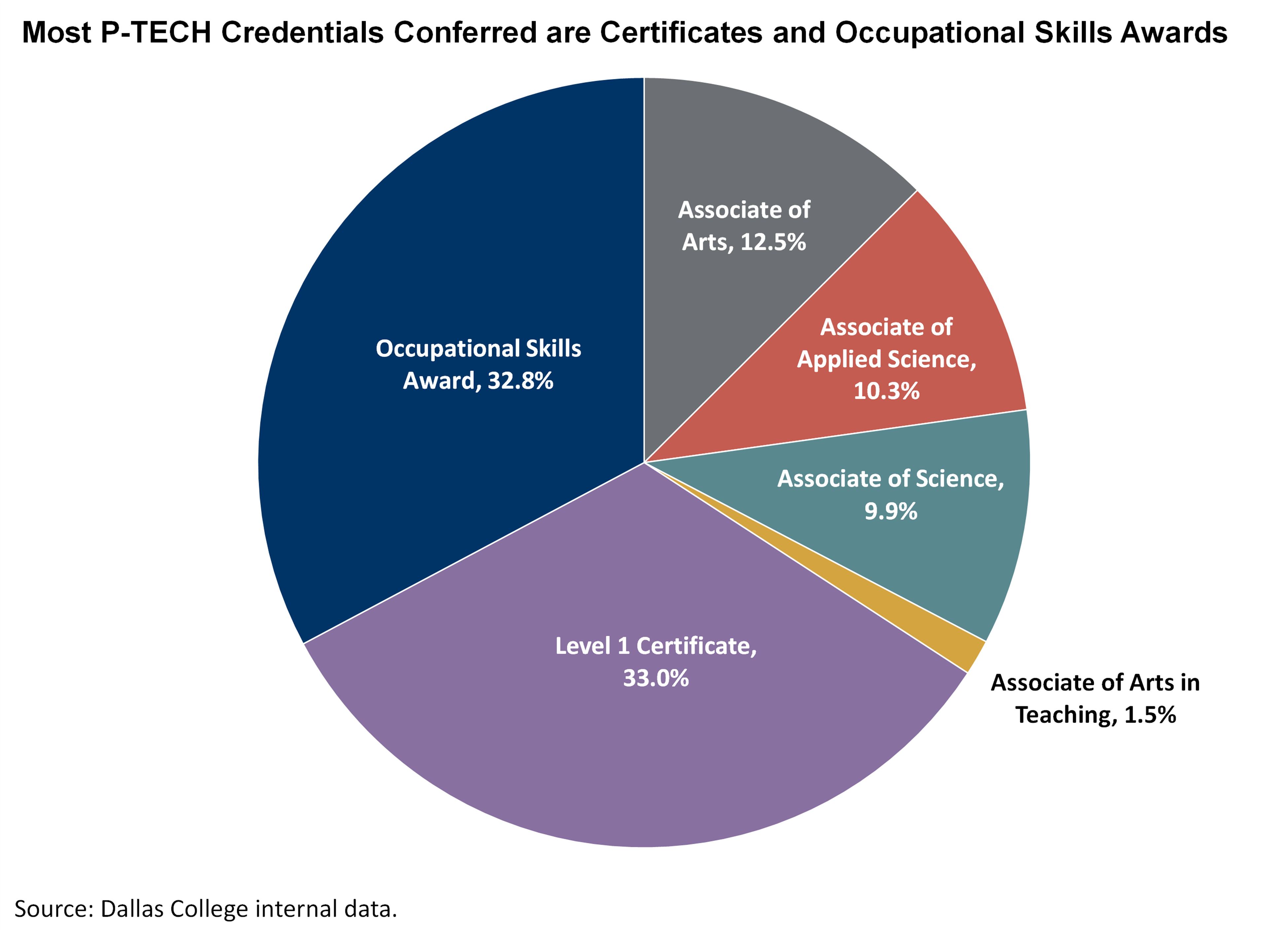
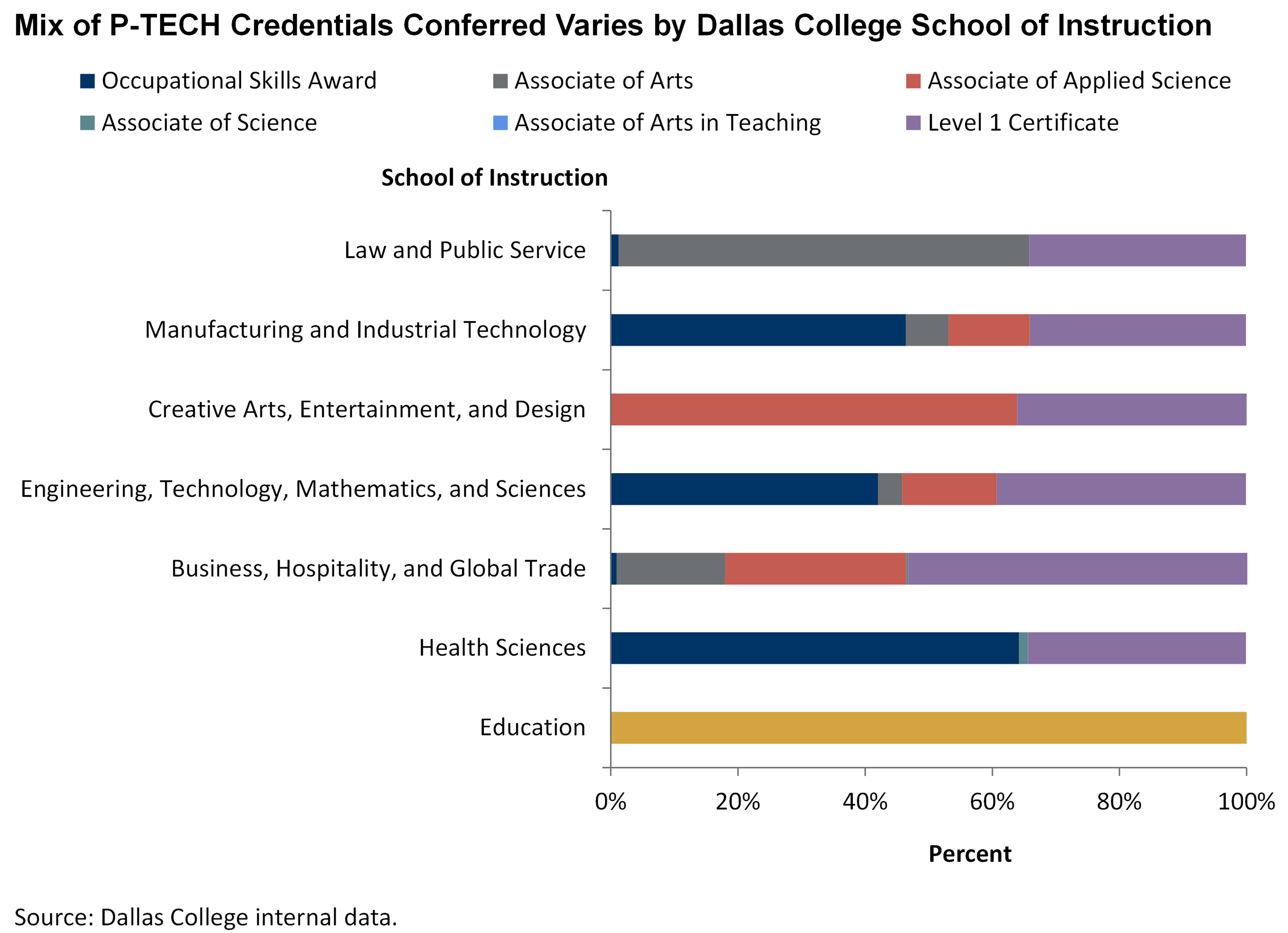
Figure 5 presents the distribution of credential types conferred across the College’s Schools of Instruction. Completion of the general AA and AS degrees are excluded, as these credentials are not uniquely aligned with a specific School. The School of Engineering, Technology, Mathematics, and Sciences awarded the largest number of credentials (1,440), followed by Health Sciences with 743, Manufacturing and Industrial Technology with 491, and Business, Hospitality, and Global Trade with 351 credentials conferred. In contrast, the Schools of Education, Creative Arts, Entertainment, and Design and Law and Public Service each awarded fewer than 100 credentials. Across the Schools, completions are concentrated in applied associate degrees, certificates, and OSAs instead of general associate degree pathways, which also require completion of the Texas Core Curriculum.
Figure 5
Core Completion
The level of core completion varies among P-TECH students across Schools of Instruction. Among the 1,073 students who completed the core curriculum across the Schools, most completions occurred within the general associate degree pathways; nearly half of General AS students (44.7%) and about a quarter of General AA students (25.9%) met the core requirements. Among the more technical or applied Schools, core completion was much lower. ETMS stands out with the highest proportion in this group (16.3%), while BHGT, Education, and LPS have only small proportions of core-complete students; no P-TECH students were core-complete in HS, MIT, or CAED. Overall, this reflects the workforce-focused design of many P-TECH pathways, which prioritizes certificates, skills awards, and applied credentials over full core completion.
Sidebox 1: Most Frequently Offered Pathways by ISDs
- Associate of Arts
- Associate of Science
- Associate of Arts in Teaching – Early Childhood through Grade 6
- Associate of Arts – Field of Study in Business Administration and Management
- Associate of Arts with Business Operations Generalist Certificate
Associate (AA/AS) and Associate of Applied Science (AAS) P-TECH pathways frequently include embedded level 1 Certificates and Occupational Skills Awards. The most desired P-TECH pathways provide students with the opportunity to complete core requirements and transfer to four-year universities.
Strengthening Data Coverage
We identified several gaps in the data that stem from the way P-TECH programs are administered across secondary school (ISD) and postsecondary domains. Because application and enrollment processes are managed by the school districts, admissions information is not collected in a comprehensive, standardized way at Dallas College, and the documentation that does exist varies across districts and high schools. Similarly, while the College maintains detailed records on students who enroll in college courses, information on students who enter P-TECH pathways but never take a college course is not collected, which makes it challenging to track full cohorts over time. Data on credential completion are more complete for credentials awarded by the College, but information on credentials earned through industry-based certification programs is less consistently available. Also, information on industry partners and work-based learning opportunities is collected through pathway documentation and district reporting, but these sources are not routinely updated and vary in level of detail.
These data limitations are typical in cross-institutional research and reflect the challenges of coordinating information across different levels of the education system. Several strategies could enhance data availability over time, which would strengthen ongoing tracking of student progress within pathways as well as future analyses. These include more systematic identification of dual credit students by pathway, routine collection of pathway-level information on work-based learning experiences, and closer coordination with district partners to align data sharing practices. Using statewide student‑level administrative data could also provide a more complete picture of longer‑term student outcomes. These approaches would increase understanding of student participation and progress within pathways and allow for more targeted advising, outreach, and program improvement as P-TECH partnerships continue to evolve.
Looking Ahead
While the intent of the P-TECH model is to provide underserved students an accelerated pathway from high school to an industry-aligned college credential and a high-demand, well-paying career, our analysis reveals that despite state expectations and requirements set forth by the TEA’s P-TECH Blueprint, the design and implementation of P-TECH programs and pathways vary across local schools districts, and decisions about whether to offer a P-TECH option are often influenced by complex factors, competition with other CTE programs, and student and family demand. We also find that P-TECH programs are continually shifting as some pathways close from low demand and others open as new interest arises. In this changing landscape, maintaining consistent data collection and tracking is difficult; however, with more deliberate upfront planning and more proactive coordination between the College and its ISD P-TECH partners, it is feasible to capture more robust, accurate, and current information on the core elements of P-TECH programs, specifically at the pathway-level, which would facilitate analyses that connect these features to student outcomes and identify areas for improvement.
Subsequent phases of this research will involve establishing a formal research partnership with a key school district partner to enable access to more detailed student-level data and program context. Future phases can also incorporate qualitative methods such as interviews with program coordinators and case studies of selected pathways to complement the existing quantitative analysis. This mixed-methods approach would allow for a more nuanced understanding of who P-TECH serves and how student experiences compare with those of other dual credit participants. Additional analyses can examine how school districts select pathway offerings and the extent to which they align with regional workforce needs. Longer-term outcomes, including postsecondary enrollment, apprenticeship and internship participation, employment, and earnings, may also be explored using statewide administrative data. Overall, this work would lead to more targeted, evidence-based recommendations to guide P-TECH program design and implementation in alignment with student success and workforce goals.
References
Dey, S. (2025, March 26). Five ways a funding overhaul has transformed Texas community colleges. Texas Tribune. https://www.texastribune.org/2025/03/26/texas-community-colleges-house-bill-8/
Rosen, R., Alterman, E., Treskon, L., Parise, L., Dixon, M., & Wuest, C. (2023). P-TECH 9-14 pathways to success: Implementation, impact, and cost findings from the New York City P-TECH 9-14 schools evaluation. MDRC. https://www.mdrc.org/sites/default/files/P-TECH_Final_Report.pdf
Texas Education Agency (TEA). (2019, July 19). House bill 3 86th Texas legislature: HB 3 bill summary. https://tea.texas.gov/hb3billsummary.pdf
Texas Education Agency (TEA). (2022). Enrollment in Texas public schools, 2021-22. https://tea.texas.gov/reports-and-data/school-performance/accountability-research/enroll-2021-22.pdf
Texas Education Agency (TEA). (2023). Enrollment in Texas public schools, 2022-23. https://tea.texas.gov/reports-and-data/school-performance/accountability-research/enroll-2022-23.pdf
Texas Education Agency (TEA). (2024). Enrollment in Texas public schools, 2023-24. https://tea.texas.gov/reports-and-data/school-performance/accountability-research/enroll-2023-24.pdf
Texas Education Agency (TEA). (2025). Enrollment in Texas public schools, 2024-25. https://tea.texas.gov/reports-and-data/school-performance/accountability-research/enroll-2024-25.pdf
Texas Education Agency (TEA). (n.d.). Early college high school (ECHS). https://tea.texas.gov/academics/college-career-and-military-prep/early-college-high-school-echs
Texas Education Agency (TEA). (n.d.). Pathways in technology early college high school (P-TECH). https://tea.texas.gov/academics/college-career-and-military-prep/pathways-in-technology-early-college-high-school-p-tech-0
Texas Higher Education Coordinating Board (THECB). (2018). Overview: Dual credit. https://reportcenter.highered.texas.gov/agency-publication/miscellaneous/dual-credit/
Texas Higher Education Coordinating Board (THECB). (n.d.). Dual credit frequently asked questions. https://www.highered.texas.gov/dual-credit-frequently-asked-questions/
Acknowledgements
We thank Dr. Tiffany Kirksey, Vice Provost of Educational Partnerships, and the Educational Partnerships Office at Dallas College for their guidance and contributions to this study.