
Do No Harm: How Federal Earnings Test Would Impact Texas Institutions of Higher Education
/prod01/dc1-cdn-pxl/media/dallas-college/content-assets/images/about-dallas-college/research-institute/DNH_Brief_Cover_Photo.svg)
Navi Dhaliwal
Insight Brief - Published January 20, 2026
Introduction
College should be valuable for students, leaving them better off after they graduate than when they enroll, at a reasonable cost. This perspective is not controversial in intent, but it has proven challenging in practice. Over nearly two decades, through numerous starts and stops, policymakers have sought to enshrine this basic premise into regulatory frameworks that hold institutions of higher education accountable for student outcomes. While gainful employment after college can be broadly defined as having a manageable student debt-to-earnings ratio, multiple rounds of negotiated rulemaking, lawsuits, and policy shifts across presidential administrations, have adjudicated this definition since 2010. Today, while public data on student earnings and debt outcomes are much more abundant (though still with their limitations), the consensus on how this information should be used to monitor, evaluate, and govern postsecondary institutions remains unsettled.
The latest earnings test to emerge from this ongoing saga, set to take effect in July 2026, is the Do No Harm standard, which requires that an institution’s median working and non-enrolled Title IV graduate, four years after completion, earns at least as much as a high school graduate: $35,490 nationwide and $35,055 in Texas for high school diploma or GED holders between the ages of 25 and 34. Institutions that fail this standard for two out of three consecutive years would lose access to federal loans. Furthermore, as of December 2025, institutions that fail the Do No Harm standard are also being labeled as “lower earnings” on the FAFSA (Free Application for Federal Student Aid); first-time undergraduate FAFSA completers will be warned when selecting such institutions.
This brief explores how the Do No Harm test will affect Texas institutions of higher education, with a focus on the Dallas-Fort Worth region. Overall, we find that all public institutions in Texas—including Dallas College and all of its programs—pass, suggesting that the new rule will likely have minimal direct impact on funding eligibility and operations.
National and State Implications
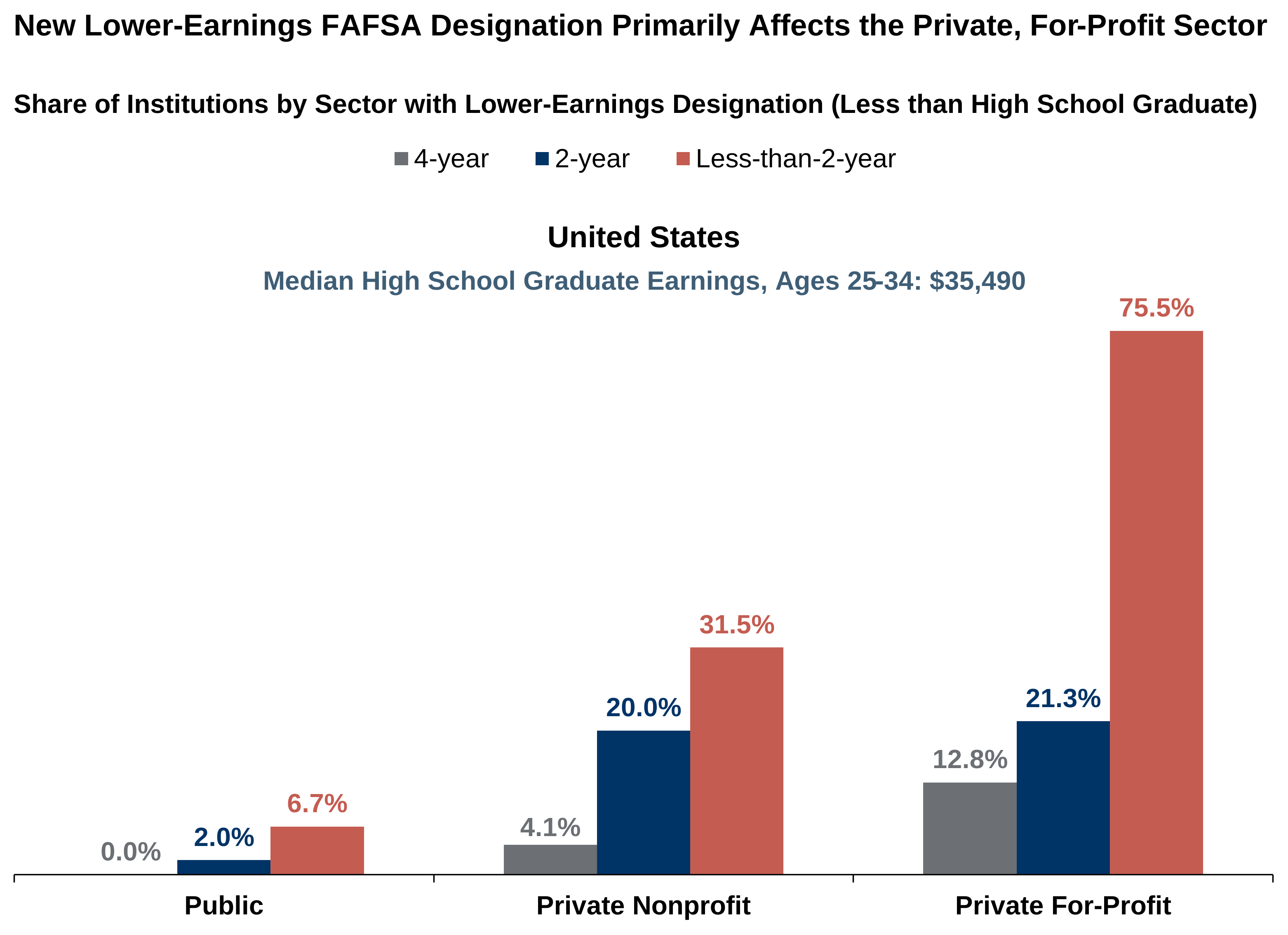
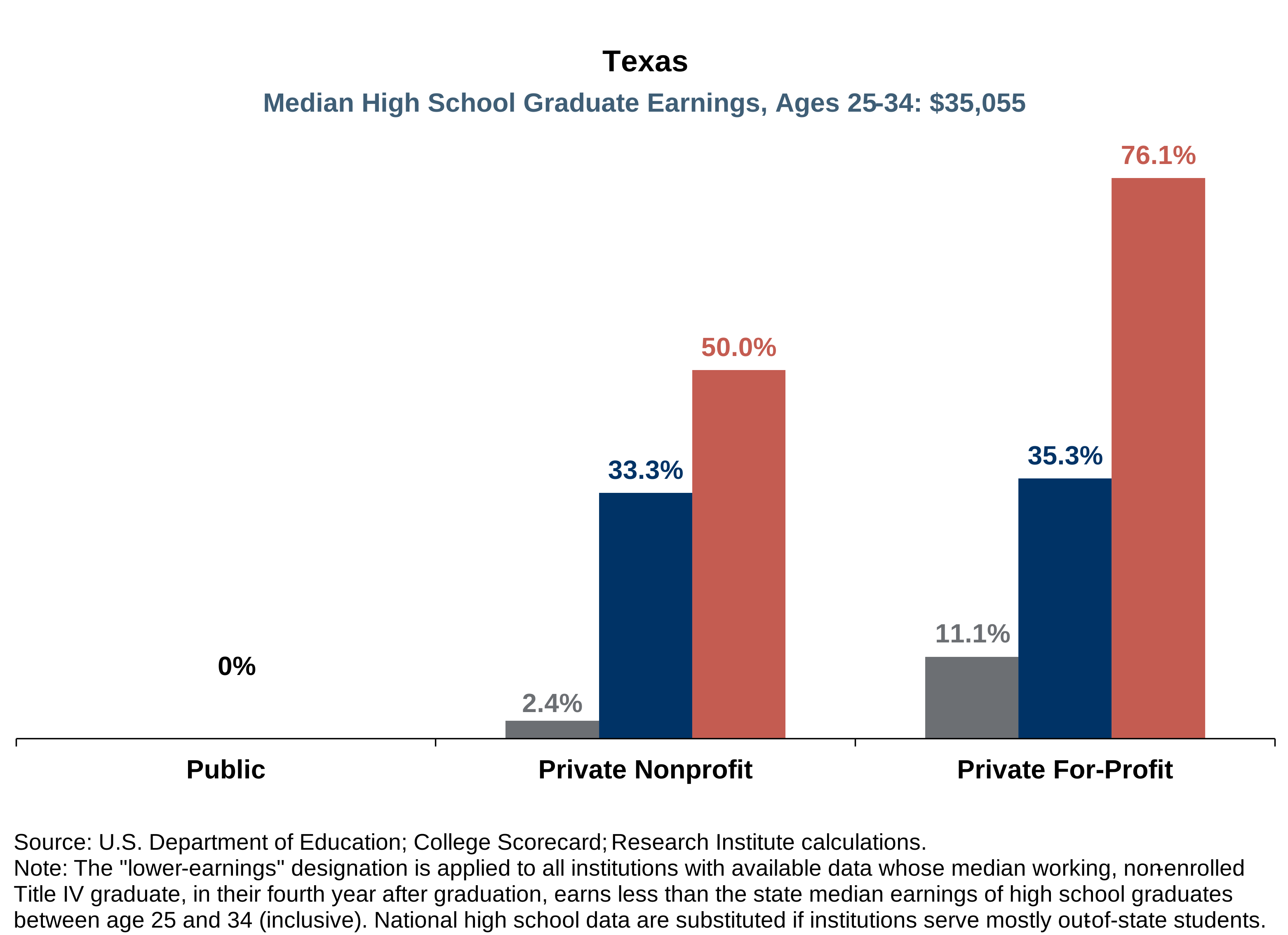
At both the national and state levels, most, but not all, postsecondary institutions pass the Do No Harm test. In our analysis of lower-earnings data, out of around 4,900 institutions nationwide with non-missing (and non-privacy-suppressed) earnings data, roughly 72% pass and 28% fail. In Texas, pass rates are slightly worse: out of 314 institutions, 62% pass and 38% fail. Institutions that mostly award less-than-two-year certificates fail at the highest rates, followed by those that primarily award associate degrees, with those awarding bachelor’s degrees failing at the lowest rates. However, the overall data mask considerable variation by sector. Public institutions seldom fail the Do No Harm test nationally, and zero fail the test within Texas (Figure 1). This includes public four-year universities, community colleges, and public technical schools that predominantly award less-than-two-year certificates. Outcomes are more mixed in the private nonprofit sector: nationwide, around 4% of private nonprofit four-years fail the test, 20% of two-years fail, and 32% of less-than-two-years fail; in Texas, these shares are 2%, 33%, and 50%, respectively. The private for-profit sector, meanwhile, constitutes the bulk of institutions failing the Do No Harm test both nationally and statewide. Nationally, 13% of four-year for-profit institutions fail, 21% of two-years fail, and a staggering 76% of less-than-two-years fail; in Texas, these shares are 11%, 35% and 76%, respectively. The lower earnings designation is applied at the institution level, not by program. However, many lower-earnings for-profits specialize in specific programs, especially cosmetology.
Figure 1
Earnings Outcomes in DFW
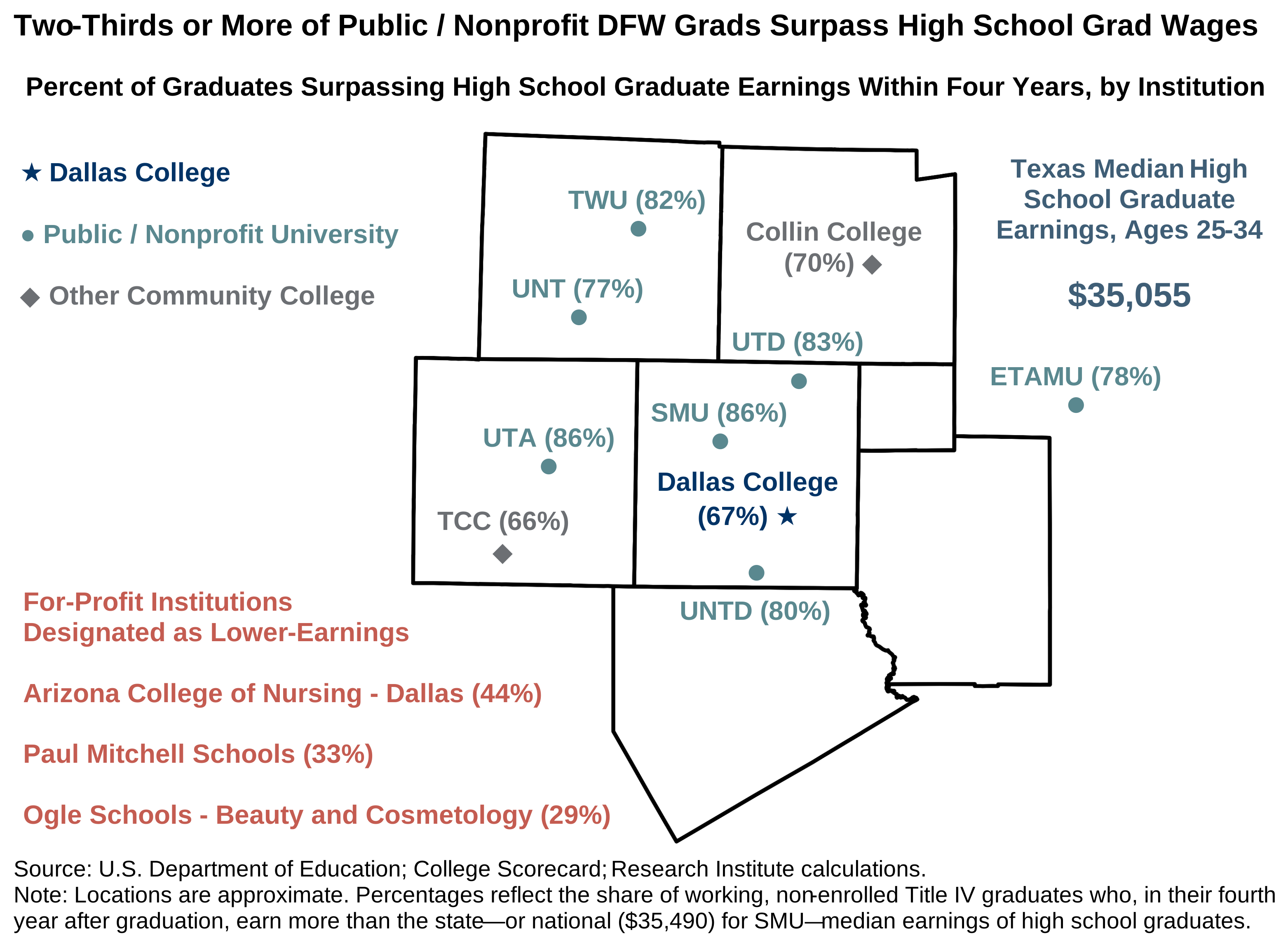
As is true in Texas as a whole, no public postsecondary institutions in the Dallas-Fort Worth (DFW) metroplex are designated as lower-earnings; all pass the Do No Harm test. Also mirroring national and state data, four-year institutions tend to outperform community colleges in DFW, which is unsurprising given the higher earnings potential of bachelor’s degrees relative to associate degrees and certificates. Although Dallas College now offers multiple bachelor’s programs itself, these were not implemented during the measurement period used for the Do No Harm test, which looks at the earnings in 2019 and 2020 of students who graduated in 2015 and 2016. The Do No Harm test examines whether the median student, four years after graduation, surpasses the median earnings of someone with a high school diploma ($35,055 in Texas), but College Scorecard data also allow us to examine the percentage of graduates at each institution who meet this threshold. At Dallas College, 67% of working, non-enrolled Title IV graduates surpass high school diploma earnings within four years of graduation. Throughout DFW, across all public institutions—including peer community colleges and Dallas College’s Transfer Success Fund four-year partners—approximately two-thirds or more of working, non-enrolled Title IV graduates exceed high school diploma earnings within four years (Figure 2). At DFW-area for-profit institutions, in contrast, the share of postsecondary graduates meeting the Do No Harm standard is sometimes below half, and, in a few cases, less than one-third.
Figure 2
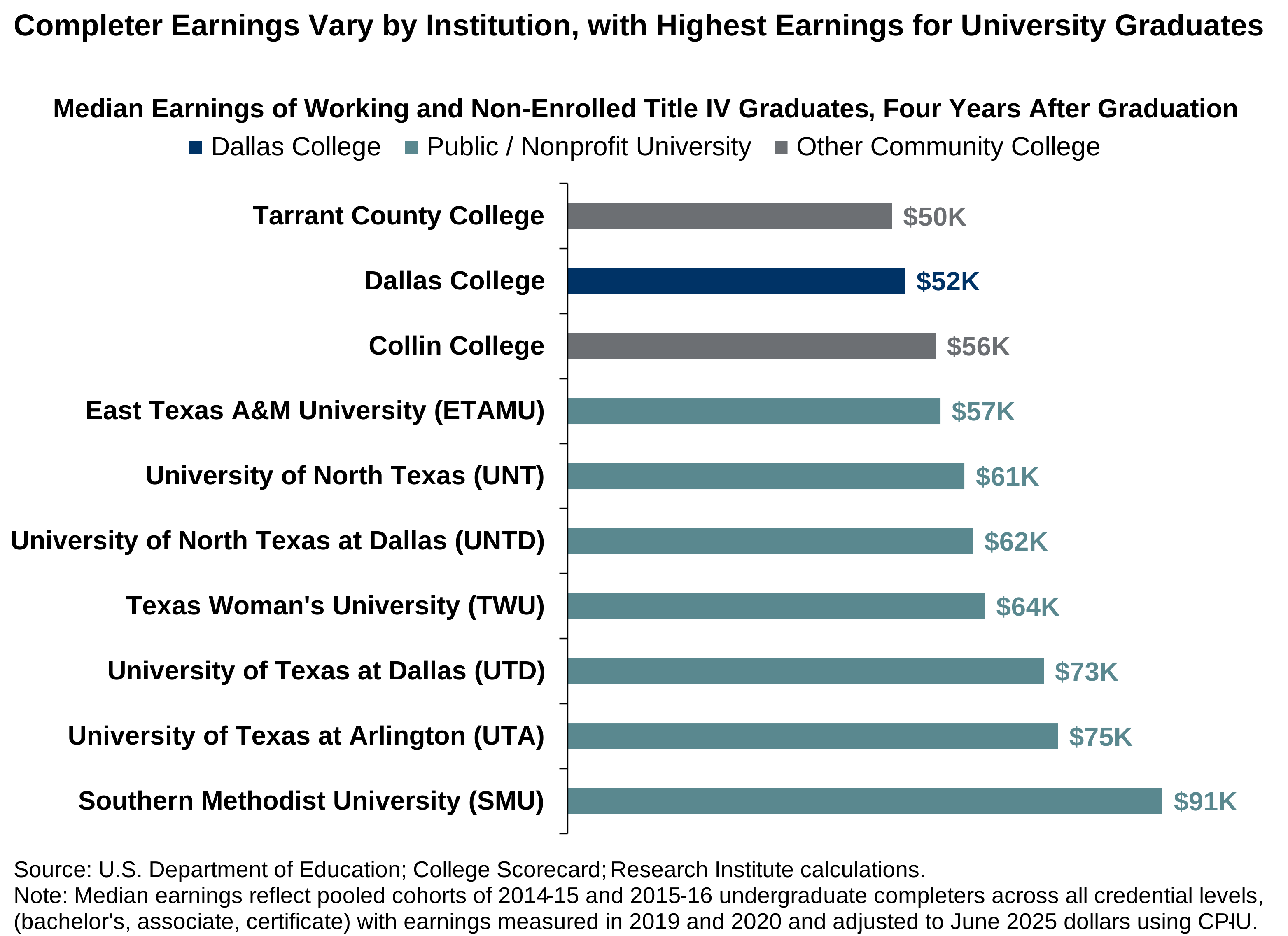
College Scorecard data also allow us to examine the median four-year earnings of graduates by institution. These values reflect the 2019-2020 earnings of graduates from 2015-2016, pool all programs and degree types together, only include completers who received Title IV aid, only include those who are working and not enrolled during the earnings measurement year, and are adjusted to 2025 dollars using the Consumer Price Index for all Urban Consumers (CPI-U). Earnings data come from the Treasury’s Internal Revenue Service, meaning only formal, taxable, reported income is captured. Results are not separated by age or demographics, even though some institutions serve distinct populations (e.g., adult learners who earn more after graduation due to existing workforce experience). Some institutions’ median earnings are also statistically perturbed to protect data privacy. These caveats and data limitations are sometimes used to challenge the coverage and validity of the Do No Harm rule and other gainful employment standards, with critics arguing that the existing data do not accurately reflect student outcomes.
These constraints notwithstanding, we use College Scorecard data to summarize the median four-year earnings outcomes of DFW-area graduates (Figure 3). Dallas College graduates post four-year earnings of $52,000 per year, landing in between regional community college peers in neighboring counties. DFW-area four-year public universities generally exhibit higher median earnings, including several of Dallas College’s top transfer destinations, again reflecting the importance of bachelor’s completion for students’ after-college earnings potential.
Figure 3
Programs at Dallas College
Although the Do No Harm test currently applies at the institution level—not at the program level—it is worth examining which programs at Dallas College show the most promising earnings outcomes for students and where outcomes can be improved. College Scorecard data allow us to disaggregate outcomes by field of study for fields that are large enough to not require privacy suppression; all such fields at Dallas College had at least 50 Title IV graduates who were employed and not enrolled four years after graduating. These data are organized by credential level (i.e., bachelor’s, associate, certificate) and four-digit Classification of Instructional Program (CIP) group, meaning they do not exactly match the program and school names used at Dallas College. Overall, out of 103 programs in the Scorecard data for Dallas College, just 14, or 13.6%, had non-suppressed earnings information available. Encouragingly, though, all programs with available data pass the Do No Harm test, with even the lowest-paying program yielding a $5,000 earnings increase relative to median high school graduate earnings (Table 1).
Table 1
|
Credential Type |
Field of Study |
Median Four-Year Earnings |
% of Grads Surpassing High School Graduate Earnings within Four Years |
|
Associate Degree |
Registered Nursing |
$80,103 |
83% |
|
Business / Commerce |
$60,975 |
75% |
|
|
Business Admin. & Mgmt. |
$51,900 |
72% |
|
|
Teacher Education |
$51,562 |
64% |
|
|
Accounting |
$50,292 |
70% |
|
|
General Associate of Arts |
$47,971 |
63% |
|
|
Criminal Justice |
$46,161 |
65% |
|
|
Certificate |
Computer Networking |
$60,921 |
72% |
|
Business Admin. & Mgmt. |
$52,081 |
74% |
|
|
Accounting |
$51,921 |
78% |
|
|
Criminal Justice |
$50,042 |
65% |
|
|
Real Estate |
$47,212 |
63% |
|
|
Veterinary Health Tech. |
$44,044 |
66% |
|
|
Data Processing |
$40,271 |
59% |
Graduate earnings by program four years after completion range from $80,000 for an associate degree in registered nursing to $40,000 for a certificate in data processing. An important caveat is that programs enroll different profiles of students, whose age and experience can affect earnings outcomes. For example, the largest program by enrollment shown here, a general Associate of Arts, typically enrolls younger students than Dallas College’s workforce certificate offerings do.
Conclusion
For now, the Do No Harm test should have minimal impact on Dallas College and the public higher education sector both regionally and nationally, with for-profit institutions being most affected. Dallas College passes the Do No Harm test, and all of its programs with available data also meet this standard—with most graduates quickly surpassing high school graduate earnings in four years or less after completion—and growing numbers transferring or completing in-house bachelor’s degrees with even greater earnings potential. In our analysis of College Scorecard data, we find around 7,500 undergraduates are enrolled in lower-earnings for-profits in DFW, and this new FAFSA designation may draw more students away from them and into public colleges and universities, although it remains to be seen whether and how this added warning will influence prospective student behavior. With Workforce Pell implementation also slated for July 2026, Dallas College should continue to bolster enrollment in programs conferring high-wage, in-demand skills, promote bachelor’s completion via its own offerings and streamlined transfer pathways, maintain affordability, and emphasize the importance of persistence and completion, which underlies all of the data presented in this brief. Overall, the college is well-positioned to not only withstand these policy shifts, but to leverage them in support of student success by continuing to advance clear pathways to high-value credentials.