Transfer Pathways and Economic Mobility: Evidence from Dallas College and North Texas
/prod01/dc1-cdn-pxl/media/dallas-college/content-assets/images/about-dallas-college/research-institute/transfer-pathways.png)
McKenna Griffin, Dillon Lu, Navi Dhaliwal, and Lanita Etea
Insight Brief - Published December 22, 2025
Introduction
Many community college students, including those at Dallas College, enroll with the aspiration of earning a bachelor’s degree. In most cases, this means that the student hopes to earn credits at the community college, transfer to a four-year university, and ultimately earn their degree. Transfer pathways can appeal to students for several reasons. Community colleges offer a more affordable entry point to higher education, with more accessible admissions requirements, and often more convenient locations and flexible course offerings. Yet the evidence on whether transfer generates long-term economic value for students is mixed (Belfield, 2013; Andrews et al., 2014; Kopko & Crosta, 2016; Baker, 2016; Velasco et al., 2024; Miller, 2025). Students can realize positive economic returns from vertical transfer, but frictions in the transfer process, the risk of not graduating after transfer, and disparities in outcomes by student characteristics mean that transfer alone is far from a guarantee of economic mobility.
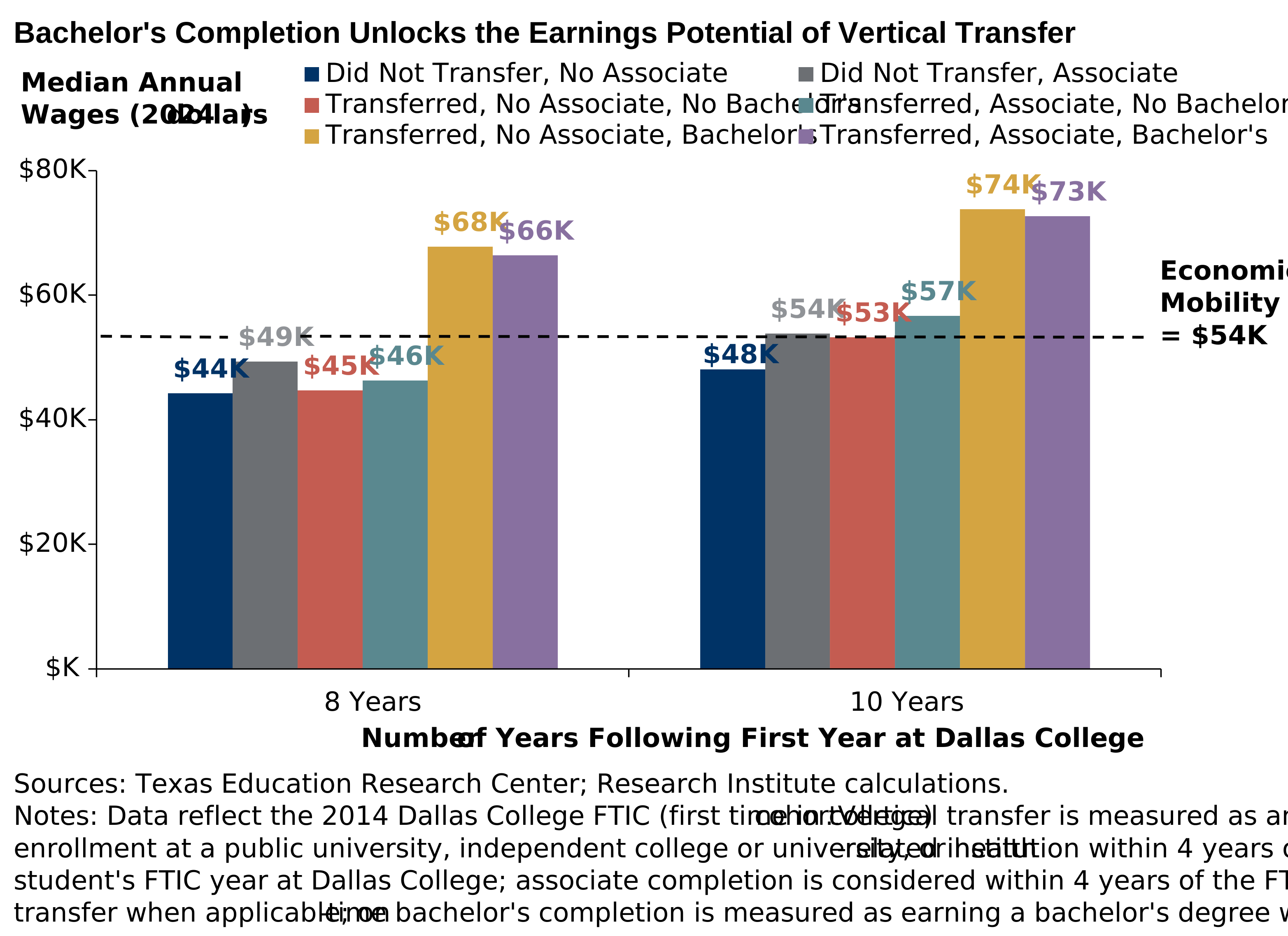
In this analysis, we examine whether transfer pays off – and what factors are associated with post-transfer success – in the context of Dallas College. Using administrative data from the Texas Education Research Center, we trace the outcomes of more than 200,000 first-time-in-college (FTIC) students who initially enrolled at Dallas College between 2010 and 2022. We report both descriptive statistics and regression estimates of the factors associated with transfer rates, bachelor’s completion rates, and earnings – including whether students achieve an economic mobility threshold (defined as earnings at or above the 60th percentile in Texas). Overall, we find that – despite variation across student characteristics and major – the economic gains from transfer are strongly connected to bachelor’s completion (Figure 1). This result should inform Dallas College’s ongoing effort to simplify and streamline transfer pathways, exemplified by the Dallas County Promise Transfer Success Fund and Dallas Transfer Collaborative initiatives, so that more students are able to not only transfer from Dallas College to their next destinations, but do so with a clear academic plan and the supports needed to graduate in a timely manner.
Figure 1
Transfer Trends Over Time
At Dallas College, transfer rates have risen over the past decade, whether measured within two, four, or six years of an FTIC student’s first term of enrollment. Within four years of enrolling at Dallas College, just 14% of students from the 2010 FTIC cohort transferred vertically (to a public university, independent college or university, or health-related institution), compared to 23% for the 2020 FTIC cohort (Figure 2). We see similar patterns in six-year transfer rates, with an additional 3-5% of students transferring within six years of their FTIC term. In 2019, we also see a jump in two-year transfer rates, from a steady 5% from 2010 to 2018 to 10% from 2019 to 2022. A mix of policy and environmental factors may have contributed to this change, including scaling of the guided pathways movement throughout Texas, implementation of Texas Senate Bill 25 (designed to facilitate credit transfer and timely graduation), and adjusted transfer and admissions requirements during the COVID-19 pandemic. While 2022 FTIC students are our most recent cohort (to allow for time to transfer), new policies like Texas House Bill 8 have further incentivized vertical transfer from community colleges to public universities in recent years.
Figure 2
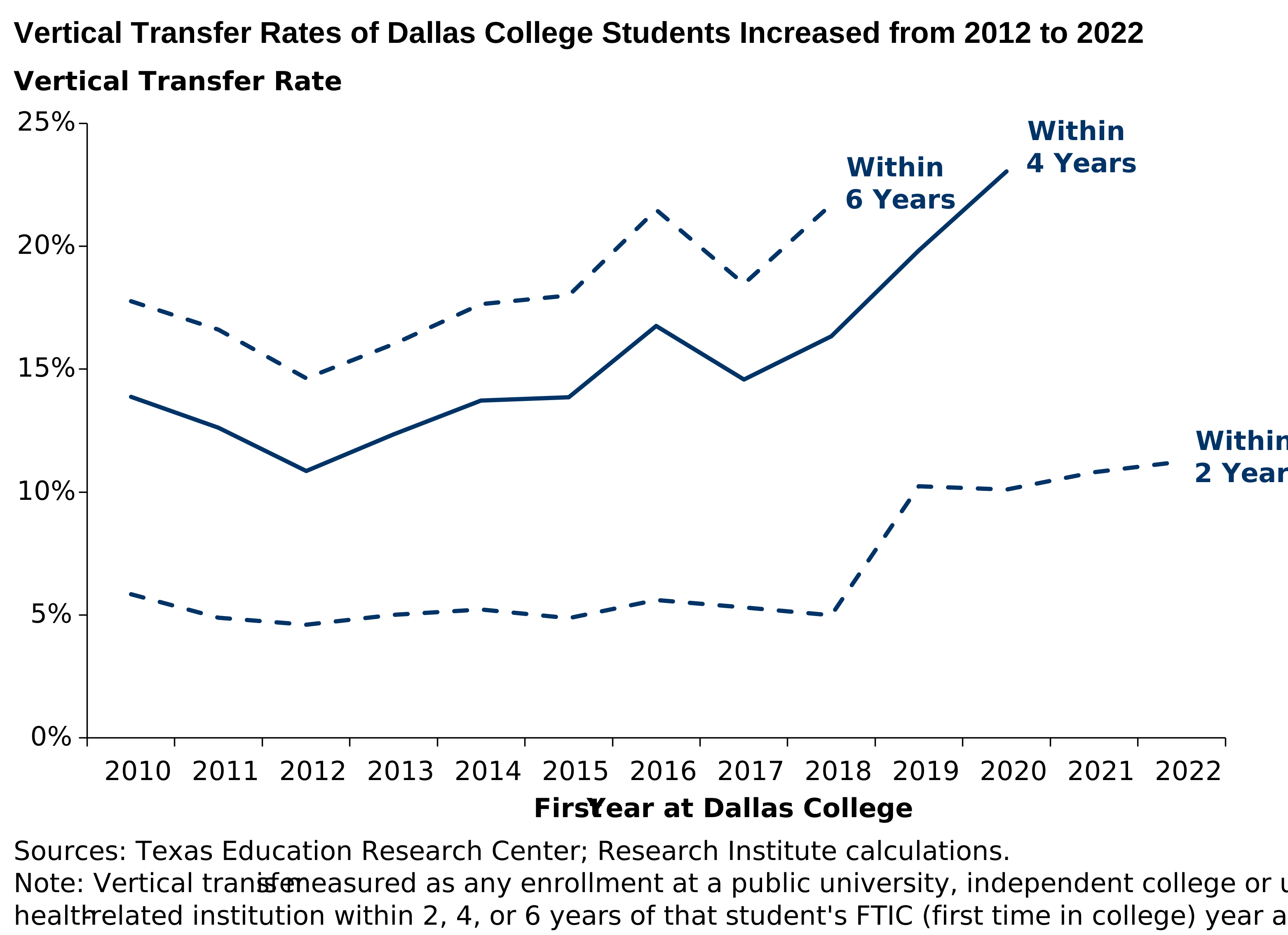
The data also underscore that vertical transfer is seldom a “2+2” experience for Dallas College students (i.e., two years at Dallas College and two years at the transfer destination). For most cohorts, more than twice as many students transfer within four years as transfer within two years. Given that nearly three-fourths of Dallas College students enroll part-time, it is unsurprising that it often takes more than two years to transfer. Still, time-to-transfer has implications for a student’s ability to graduate with a bachelor’s degree on time and their ability to gain full-time work experience earlier in their career, which can affect their future employment and earnings. Because of this, Dallas College must understand not only who transfers, but when they do so.
Transfer Rates and Timing
Overall, 5% of Dallas College students in the 2014-2018 FTIC cohorts transferred within two years, 15% did so within four years, and 20% did so within six years. But transfer rates – and the timing of transfer itself – vary considerably across student attributes, including demographics, program of study, and whether the student has completed an associate degree (Figure 3). For example, economically disadvantaged students generally transfer at lower rates than non-disadvantaged students (by 3-4 percentage points). Adults (25 and older) transfer at lower rates than traditional age students (under 25) within two years (4 percentage points), and this gap widens within four to six years (12-14 percentage points). We also find that Black and Hispanic students generally transfer at lower rates than White and Asian students. For example, a larger share of White students transfers within four years (23%) than Black and Hispanic students do within six years (18%). Female and male students transfer at similar rates within two years (5%), but a gap of 2-5 percentage points emerges in favor of female students when measuring four- or six-year rates.
Figure 3
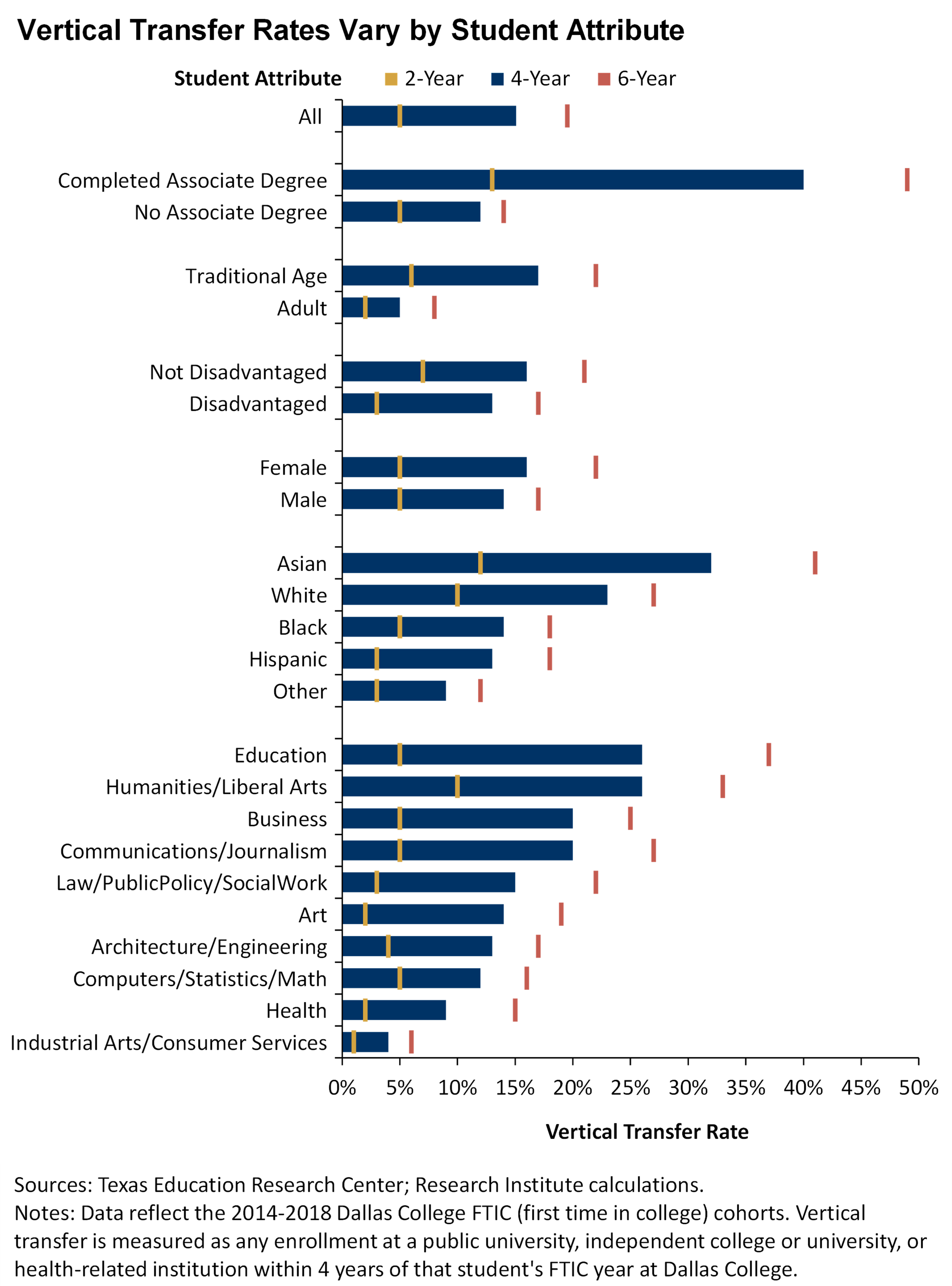
Students’ pre-transfer fields of study also factor into their transfer rates and timing. Fields have varying prerequisites, and specific courses vary in their eligibility for transfer credit, both of which may affect how long students spend in community college. Furthermore, some fields and programs are designed for students to seek employment after graduating with an associate degree or certificate, while others are designed with a bachelor’s pathway in mind. We group fields into broad categories (defined by the Texas Higher Education Coordinating Board) based on their Classification of Instructional Program (CIP) code and find broad differences in transfer rates. For example, just 1% of students in the industrial arts field transfer within two years (because this field contains mostly applied programs designed for workforce entry), versus 10% of students in the humanities and liberal arts (the field used for a general or core Associate of Arts degree, typically intended for transfer). These rates expand to 6% within six years for students in the industrial arts versus 33% for students in the humanities and liberal arts, a marked difference. Our logistic regression estimates, detailed in an Appendix at the end of the brief, are largely consistent with our descriptive findings, with significant differences in transfer rates found by cohort, demographics, degree attainment, field of study, and credit hours completed.
Sidebox 1: Increasing Transfer Rates through Regional Collaboration
Dallas College is engaged in several efforts to bolster transfer rates and make the transfer process more seamless for students. The Dallas Transfer Collaborative is one such initiative. A partnership between Dallas College, East Texas A&M University, Texas Woman’s University, and the University of North Texas at Dallas, the Collaborative introduces three new meta-major pathways in business, education, and health sciences. Each meta-major pathway consists of a block of lower-division courses that are guaranteed to be accepted for transfer credit toward a variety of related majors at the partnering university, with more meta-majors being developed. The Collaborative also introduces new tools for students, including Transfer Central, a centralized hub for transfer information and resources, and myCredits Estimator, which allows students to explore how their credits will transfer at the partnering universities.
Post-Transfer Bachelor’s Graduation Rates
Not every student intends to transfer. Because of this, differences in transfer rates by student group are not necessarily a cause for concern in isolation. However, once students do transfer, it is imperative that they successfully graduate with a bachelor’s degree – and do so at similar rates. We calculate regression-adjusted bachelor’s completion rates to show how – conditional upon transfer – the probability of earning a bachelor’s degree in a timely manner (within four, six, or eight years) varies across student groups (Figure 4). These predicted values allow us to compare bachelor’s completion rates while controlling for underlying differences in academic and demographic characteristics of each group. The data expose that there are gaps in post-transfer bachelor’s completion. Overall, we estimate that just 27% of students who transfer within two years graduate with a bachelor’s degree within four years, 55% of students who transfer within four years graduate within six years, and 63% of students who transfer within six years graduate within eight years. Together, these results showcase the challenge of bachelor’s completion: More than a third of students who transfer do not earn a bachelor’s degree within eight years, just under three-in-four who transfer do not complete a “2+2” pathway on time, and whether a student who transfers within four years will graduate within six is a tossup — nearly half do not.
The challenge of bachelor’s completion is pervasive across all groups. Even in the best-case scenarios – for the populations, majors, and institutions with the highest graduation rates – a quarter or more of transfer students do not graduate on time. In general, we find that women graduate with their bachelor’s degree after transferring at higher rates than men, that Asian and White students graduate at higher rates than Hispanic students, that Black students graduate at the lowest rates, and that students who complete an associate degree graduate at higher rates than those who do not. Results by age and socioeconomic status are more nuanced. Economically disadvantaged students and adult learners complete a “2+2” pathway at higher rates than their respective counterparts but show lower on-time completion rates at the six and eight year marks. This result may reflect the urgency of on-time completion for these groups for financial reasons.
Figure 4
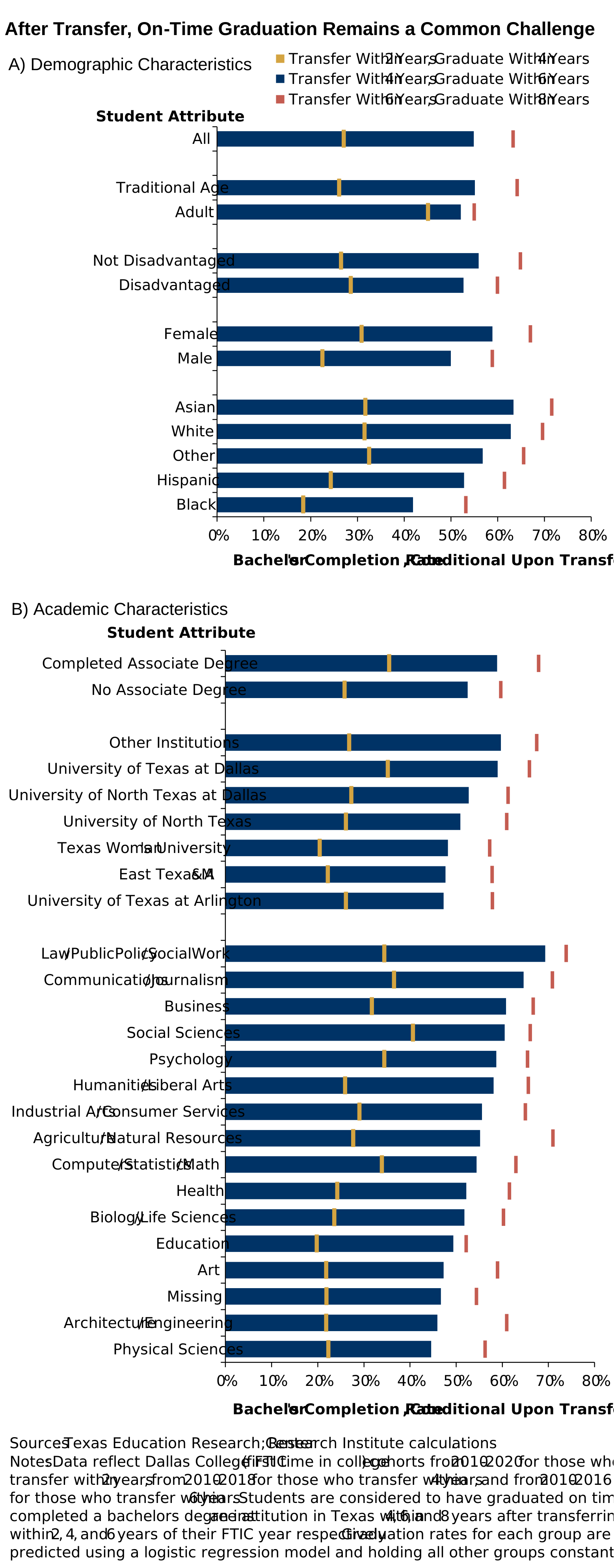
Completion rates also vary across institutions, with a 10-15 percentage point gap between universities with the highest and lowest graduation rates for transfer students. Post-transfer major or program of study significantly relates to on-time graduation as well. When focusing on students who transfer within four years and assessing the share who graduate within six years, more than 60% of transfer students who major in social science, business, communications, journalism, law, public policy, and social work graduate on time compared to less than 50% of transfer students who major in physical sciences, architecture, engineering, art, or education. These disparities may stem from the general difficulty of graduating in these majors (for both transfer and non-transfer students), differences in academic preparation requirements, and gaps in whether lower-division courses are accepted depending on the field. When students decide to transfer, these rates matter. A student who intends to major in journalism can have a (relatively) high degree of confidence that they can graduate on time after transferring. But one who seeks to major in engineering may think twice about whether transfer is the best route.
Sidebox 2: Investing in Post-Transfer Student Success
Changing the past decade of bachelor’s completion rates so that more transfer students go on to successfully graduate is a regional priority in North Texas. In October 2025, the Commit Partnership and Dallas College announced a combined $60 million investment in student success made by the O’Donnell and Dallas College Foundations. The funds will be used to launch early recruitment programs at Dallas County Promise middle and high schools, expand success coaching for Dallas College students who transfer to the University of Texas at Dallas, the University of North Texas at Dallas, and Southern Methodist University, and establish the Dallas County Promise Transfer Success Fund, a new source of financial assistance for Dallas College students who transfer to any of seven regional Promise partner institutions, including the aforementioned universities plus the University of North Texas, University of Texas at Arlington, Texas Woman’s University, and East Texas A&M University. Critically, this investment emphasizes the resources and support needed to graduate after transfer, not just transfer itself. Our findings offer a historical baseline for this new initiative.
Economic Outcomes After Transfer
Once students transfer, bachelor’s completion is one of the strongest predictors of earnings and economic mobility, as Figure 1 illustrates. In our regression estimates of log earnings, we assess how much transfer students earn at six, eight, and ten years after their FTIC term: Our model predicts $46,190, $53,666, and $61,003, respectively, across all vertical transfer students who are employed for at least three of four quarters in each earnings measurement year. We find that on-time graduation with a bachelor’s degree is the second most important variable associated with earnings, aside from the age of the student. All else held equal, the students who graduate with a bachelor’s degree on time earn around 33% more than students who transferred but never earned an associate or bachelor’s degree (around $57,000 vs. $43,000 eight years after FTIC enrollment). Whether the student has an associate degree does not significantly enhance their earnings after they transfer; at that point, bachelor’s completion is what matters. Likewise, the student’s pre-transfer major is not significantly related to their earnings, while their post-transfer major is. Recall, however, that while these variables are not significant in predicting earning post-transfer, they do impact the steps that lead to a successful bachelor's completion. For example, associate degree holders are both more likely to transfer within four to six years of their FTIC term and to complete a bachelor's degree once they have transferred, indirectly supporting students’ long-term earnings. We also find that for every additional year that transfer students spend in community college (prior to transfer), they face around a 10% earnings penalty (Appendix Table 5). Together, the results all point to the importance of timely graduation with a bachelor’s degree – without this, transfer alone does not enhance student earnings.
Figure 5
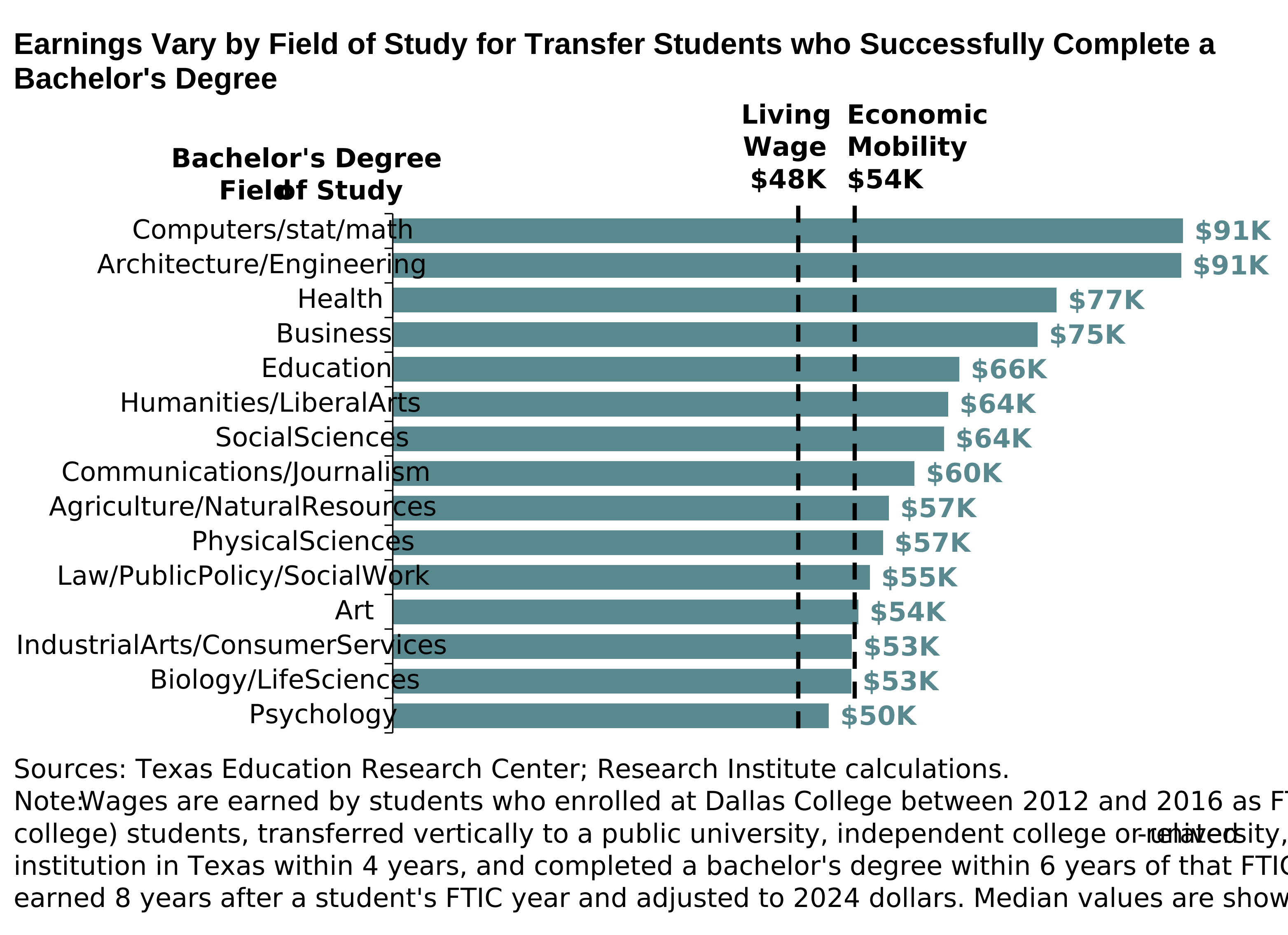
Transfer students’ earnings do vary by the field of study of their bachelor’s degree. For example, in the eighth year after their initial FTIC term, students who transferred within four years and graduated within six years have median earnings that range from $50,000 to $91,000 per year depending on their field (Figure 5). Conditional upon graduation after transfer, the typical student in most fields earns a living wage for a single adult with no children, according to Living Wage Calculator estimates for Dallas County (which place the living wage cutoff—or the amount needed to cover basic needs and support oneself—at $23.06 per hour or $47,965 per year). Students in most majors (all but three categories) are also able to reach an economic mobility threshold of 60th percentile earnings within the state of Texas, or $53,595 per year. In the same timeframe, in contrast, students from the FTIC cohorts who did not transfer or earn an associate degree had median earnings of $44,000 per year, while those who did not transfer but graduated with an associate degree had median earnings of $49,000 per year (Figure 1). Therefore, while there is variation in what students earn after they transfer and graduate depending on their field, most students who reach this stage still experience relatively favorable outcomes.
Conclusion
While there remain opportunities for transfer and bachelor’s completion rates to improve, our analysis shows that the proportion of students who transfer vertically within two, four, and six years of their first year at Dallas College has steadily risen over a decade. Furthermore, students who do transfer and successfully graduate with a bachelor’s degree realize positive economic outcomes, earning wages that exceed the living wage threshold ($47,965) regardless of program of study; and, for many degree programs, exceed the economic mobility threshold ($53,595).
We also find substantial variation in transfer outcomes by student attributes. In many cases, these characteristics lie outside of students’ direct control and should be understood as indicators of where additional institutional support is most needed – particularly for students from historically underserved populations. Encouragingly, Dallas College is already engaged in efforts such as the Dallas Transfer Collaborative that aim to promote more favorable transfer outcomes for all students, no matter their background. In other cases, differences in outcomes are associated with factors such as associate degree completion, transfer destination, or program of study – areas where evidence from this analysis can directly inform student advising and decision-making.
Perhaps most critically, the findings underscore the importance of transfer and completion. Students who transfer but do not go on to graduate with a bachelor’s degree do not realize the same wage gains as those who do. Although student debt was not incorporated into this analysis, these students also incur additional time and financial costs at their transfer institutions, unlike their peers who do not transfer. Taken together, these results highlight the need for advising practices that emphasize completion-oriented transfer pathways and reinforce the value of efforts such as the Transfer Success Fund, which provides financial assistance to students after transferring and encourages degree completion. In addition to transfer success, Dallas College should also continue to review the completion patterns of students in its own growing set of bachelor’s programs, in recognition of the role that a four-year degree can play in shaping economic mobility. The Research Institute looks forward to examining how these and other initiatives shape outcomes as current students begin to access these expanded support services.
References
Andrews, R. J., Li, J., & Lovenheim, M. F. (2014). Heterogeneous paths through college: Detailed patterns and relationships with graduation and earnings. Economics of Education Review, 42, 93–108. https://doi.org/10.1016/j.econedurev.2014.07.002
Baker, R. (2016). The effects of structured transfer pathways in community colleges. Educational Evaluation and Policy Analysis, 38(4), 626–646. https://doi.org/10.3102/0162373716651491
Belfield, C. (2013). The economic benefits of earning an associate degree before transfer: Evidence from North Carolina (CCRC Working Paper No. 62). Community College Research Center, Teachers College, Columbia University. https://ccrc.tc.columbia.edu/wp-content/uploads/2013/07/economic-benefits-associate-degree-before-transfer.pdf
Kopko, E., & Crosta, P. M. (2016). Should community college students earn an associate degree before transferring to a 4-year institution? Research in Higher Education, 57, 190–222. https://doi.org/10.1007/s11162-015-9383-x
Living Wage Institute. (n.d.). Living wage data for Dallas County, Texas. Retrieved December 18, 2025, from https://livingwage.mit.edu/counties/48113
Miller, L. (2025). Switching schools: Effects of college transfers (EdWorkingPaper No. 25-1159). Annenberg Institute at Brown University. https://doi.org/10.26300/4khw-c054
Postsecondary Value Commission. (2021). Equitable value: Promoting economic mobility and social justice in postsecondary education (Final report). https://live-postsecondary-value-commission.pantheonsite.io/wp-content/uploads/2021/07/PVC-Final-Report-FINAL-7.2.pdf
Velasco, T., Fink, J., Bedoya, M., Jenkins, D., & LaViolet, T. (2024). Tracking transfer: Community college effectiveness in broadening bachelor’s degree attainment (Revised Aug. 2025). Community College Research Center, Teachers College, Columbia University, Aspen Institute College Excellence Program, & National Student Clearinghouse Research Center. https://ccrc.tc.columbia.edu/wp-content/uploads/2024/02/Tracking-Transfer-CC-REvised-2025.pdf
Acknowledgements
We thank Paula Guidry-Zeba, Kristin Kuhne, Kimberly Chandler, and David Mahan for insights that contributed to this brief. We are also grateful to the members of the second cohort of the Value Data Collaborative, including facilitators from the Coleridge Initiative and Institute for Higher Education Policy – Corey Sparks, Jess Phillips, Marián Vargas, and Kim Dancy — for applied training with longitudinal data and economic value thresholds. Finally, we thank session attendees at Complete College America’s 2025 annual convening, where this work was first presented.
Cohorts and Dataset
For this study, we constructed a panel dataset of Dallas College FTIC students from the 2010 to 2022 academic years. Each cohort was tracked for up to ten years — or until the most recent data was available — to monitor students’ academic progress and earnings post enrollment. From this panel, we identified the subset of students who vertically transferred within two, four, or six years and subsequently earned a bachelor’s degree within four, six, or eight years. We then measured their earnings six, eight, and ten years after their FTIC year (adjusted to 2024 dollars using CPI-U). Using the data, we produced summary tables and generated descriptive statistics as well as regression analyses to examine key patterns and outcomes.
We obtained THECB data from the Texas Education Research Center, including Report 1 (Enrollment) and Report 9 (Credentials), along with wage data from the Texas Workforce Commission. The table below summarizes the years of available data included for each corresponding FTIC cohort in the panel dataset constructed. Our panel contains up to 11 years of data, counting the FTIC cohort year as Year 1. Thus, earnings “8 years after FTIC” aligns with students’ earnings in Year 9, relative to their FTIC cohort year.
Table 1. Cohort Data Availability
|
Year |
1 |
2 |
3 |
4 |
5 |
6 |
7 |
8 |
9 |
10 |
11 |
|
FTIC Cohort |
2010 |
2011 |
2012 |
2013 |
2014 |
2015 |
2016 |
2017 |
2018 |
2019 |
2020 |
|
2011 |
2012 |
2013 |
2014 |
2015 |
2016 |
2017 |
2018 |
2019 |
2020 |
2021 |
|
|
2012 |
2013 |
2014 |
2015 |
2016 |
2017 |
2018 |
2019 |
2020 |
2021 |
2022 |
|
|
2013 |
2014 |
2015 |
2016 |
2017 |
2018 |
2019 |
2020 |
2021 |
2022 |
2023 |
|
|
2014 |
2015 |
2016 |
2017 |
2018 |
2019 |
2020 |
2021 |
2022 |
2023 |
2024 |
|
|
2015 |
2016 |
2017 |
2018 |
2019 |
2020 |
2021 |
2022 |
2023 |
|||
|
2016 |
2017 |
2018 |
2019 |
2020 |
2021 |
2022 |
2023 |
||||
|
2017 |
2018 |
2019 |
2020 |
2021 |
2022 |
2023 |
|||||
|
2018 |
2019 |
2020 |
2021 |
2022 |
2023 |
||||||
|
2019 |
2020 |
2021 |
2022 |
2023 |
|||||||
|
2020 |
2021 |
2022 |
2023 |
||||||||
|
2021 |
2022 |
2023 |
|||||||||
|
2022 |
2023 |
||||||||||
We tracked 11 years of data for the 2010-2013 AY FTIC cohorts including the FTIC year and all available years for cohorts 2014-2022. The number of cohorts included in each analysis varied depending on the time required to attain each outcome. For example, all cohorts were used to observe two-year transfer rates, but only 2010-2020 could be used for four-year transfer rates.
Transfer Destination and Program of Study
In our analysis of bachelor’s completion and earnings after transfer, we include the first transfer destination of students. In the model output (Figure 4, Tables 3-6), we include specific institutions. In the table below, we grouped the destinations by their participation in a transfer initiative at Dallas College.
- Transfer Success Fund Destinations include University of Texas at Dallas, University of North Texas, University of Texas at Arlington, Texas Women’s University, University of North Texas at Dallas, and East Texas A&M University.
- Transfer Success Fund Destinations with Added Success Coaching include University of Texas at Dallas and University of North Texas at Dallas.
- The Dallas Transfer Collaborative Destinations include Texas Women’s University, University of North Texas at Dallas, and East Texas A&M University.
- Other Destinations include all four-year public, independent, and health institutions that report to the THECB and who are not included in the other groupings.
Note that there is overlap in how these destinations are grouped, therefore, the percentages below will add up to more than 100%. Additionally, in this analysis, we considered specific destinations for students with a valid program of study. This leads to two limitations. First, we do not include Southern Methodist University with the Transfer Success Fund destinations (with and without additional success coaching) because, as a private institution, program of study data was missing for those students. Students who attend Southern Methodist are included in the Other Destination category. Second, while most students have a reported program of study, those who do not will also be grouped in the Other Destination category.
Table 2. Distribution by Transfer Destination
|
|
|
Transfer Destination |
|||||||
|
|
|
of Students who Transferred Within 2 Years of FTIC Cohort Year |
|||||||
|
|
|
Transfer Success Fund |
Transfer Success Fund with Added Success Coaching |
Dallas Transfer Collaborative |
Other |
||||
|
FTIC Cohort Year |
2010 |
519 |
(41.19%) |
77 |
(6.11%) |
128 |
(10.16%) |
741 |
(58.81%) |
|
2011 |
438 |
(42.40%) |
98 |
(9.49%) |
113 |
(10.94%) |
595 |
(57.60%) |
|
|
2012 |
400 |
(44.84%) |
85 |
(9.53%) |
105 |
(11.77%) |
492 |
(55.16%) |
|
|
2013 |
416 |
(41.48%) |
107 |
(10.67%) |
90 |
(8.97%) |
587 |
(58.52%) |
|
|
2014 |
285 |
(36.17%) |
76 |
(9.64%) |
60 |
(7.61%) |
503 |
(63.83%) |
|
|
2015 |
284 |
(39.17%) |
100 |
(13.79%) |
63 |
(8.69%) |
441 |
(60.83%) |
|
|
2016 |
346 |
(40.23%) |
94 |
(10.93%) |
99 |
(11.51%) |
514 |
(59.77%) |
|
|
2017 |
251 |
(35.20%) |
90 |
(12.62%) |
73 |
(10.24%) |
462 |
(64.80%) |
|
|
2018 |
363 |
(46.12%) |
108 |
(13.72%) |
98 |
(12.45%) |
424 |
(53.88%) |
|
|
2019 |
595 |
(38.89%) |
171 |
(11.18%) |
202 |
(13.20%) |
935 |
(61.11%) |
|
|
2020 |
895 |
(40.66%) |
376 |
(17.08%) |
219 |
(9.95%) |
1,306 |
(59.34%) |
|
|
2021 |
790 |
(42.16%) |
285 |
(15.21%) |
162 |
(8.64%) |
1,084 |
(57.84%) |
|
|
2022 |
845 |
(40.09%) |
337 |
(15.99%) |
119 |
(5.65%) |
1,263 |
(59.91%) |
|
|
All Combined |
6,427 |
(40.74%) |
2,004 |
(12.70%) |
1,531 |
(9.71%) |
9,347 |
(59.26%) |
|
|
|
|
of Students who Transferred Within 4 Years of FTIC Cohort Year |
|||||||
|
|
|
Transfer Success Fund |
Transfer Success Fund with Added Success Coaching |
Dallas Transfer Collaborative |
Other |
||||
|
FTIC Cohort Year |
2010 |
1,663 |
(55.66%) |
379 |
(12.68%) |
349 |
(11.68%) |
1,325 |
(44.34%) |
|
2011 |
1,474 |
(55.31%) |
425 |
(15.95%) |
317 |
(11.89%) |
1,191 |
(44.69%) |
|
|
2012 |
1,196 |
(56.98%) |
338 |
(16.10%) |
238 |
(11.34%) |
903 |
(43.02%) |
|
|
2013 |
1,395 |
(56.34%) |
440 |
(17.77%) |
264 |
(10.66%) |
1,081 |
(43.66%) |
|
|
2014 |
1,180 |
(57.09%) |
375 |
(18.14%) |
251 |
(12.14%) |
887 |
(42.91%) |
|
|
2015 |
1,268 |
(61.55%) |
442 |
(21.46%) |
291 |
(14.13%) |
792 |
(38.45%) |
|
|
2016 |
1,534 |
(59.74%) |
512 |
(19.94%) |
399 |
(15.54%) |
1,034 |
(40.26%) |
|
|
2017 |
1,186 |
(60.66%) |
425 |
(21.74%) |
309 |
(15.81%) |
769 |
(39.34%) |
|
|
2018 |
1,640 |
(63.69%) |
548 |
(21.28%) |
446 |
(17.32%) |
935 |
(36.31%) |
|
|
2019 |
1,659 |
(55.99%) |
579 |
(19.54%) |
508 |
(17.14%) |
1,304 |
(44.01%) |
|
|
2020 |
2,735 |
(54.48%) |
1,029 |
(20.50%) |
671 |
(13.37%) |
2,285 |
(45.52%) |
|
|
All Combined |
16,930 |
(57.51%) |
5,492 |
(18.66%) |
4,043 |
(13.73%) |
12,506 |
(42.49%) |
|
|
|
|
of Students who Transferred Within 6 Years of FTIC Cohort Year |
|||||||
|
|
|
Transfer Success Fund |
Transfer Success Fund with Added Success Coaching |
Dallas Transfer Collaborative |
Other |
||||
|
FTIC Cohort Year |
2010 |
2,284 |
(59.71%) |
591 |
(15.45%) |
513 |
(13.41%) |
1,541 |
(40.29%) |
|
2011 |
2,106 |
(60.10%) |
638 |
(18.21%) |
487 |
(13.90%) |
1,398 |
(39.90%) |
|
|
2012 |
1,773 |
(62.65%) |
549 |
(19.40%) |
371 |
(13.11%) |
1,057 |
(37.35%) |
|
|
2013 |
1,979 |
(61.61%) |
642 |
(19.99%) |
447 |
(13.92%) |
1,233 |
(38.39%) |
|
|
2014 |
1,667 |
(62.72%) |
561 |
(21.11%) |
387 |
(14.56%) |
991 |
(37.28%) |
|
|
2015 |
1,780 |
(66.54%) |
629 |
(23.51%) |
429 |
(16.04%) |
895 |
(33.46%) |
|
|
2016 |
2,118 |
(64.32%) |
742 |
(22.53%) |
575 |
(17.46%) |
1,175 |
(35.68%) |
|
|
2017 |
1,612 |
(65.11%) |
564 |
(22.78%) |
435 |
(17.57%) |
864 |
(34.89%) |
|
|
2018 |
2,228 |
(65.17%) |
703 |
(20.56%) |
631 |
(18.46%) |
1,191 |
(34.83%) |
|
|
All Combined |
17,547 |
(62.91%) |
5,619 |
(20.15%) |
4,275 |
(15.33%) |
10,345 |
(37.09%) |
|
Regression Analysis
We used logistic regression to examine the variables associated with vertical transfer and bachelor’s completion rates and log-linear regression to examine the same variables’ relationships with wages. We repeated each analysis at three different time horizons for eligible cohorts only: two, four, and six years for transfer; four, six, and eight years for bachelor’s completion; and six, eight, and ten years for wages. The transfer models included variables for cohort year, race/ethnicity, pre-transfer and post-transfer field of study, age group, gender, credit hours completed at Dallas College, an indicator for whether an associate degree was completed at Dallas College, and an indicator for economic disadvantage (defined as whether the student had annual income at or below the federal poverty line, was eligible for public assistance programs [e.g., Food Stamps], or received a Pell Grant or comparable state aid). (Notably, we do not include a full suite of variables capturing academic ability or student motivation.) The bachelor’s completion models were run on the subset of students who successfully transferred and also included variables for post-transfer field of study, destination institution, and whether the student’s field changed after transfer. The earnings models were also run on the subset of students who successfully transferred, added a variable for years spent at community college, and checked for both associate and bachelor’s completion. These models were further restricted to students who had non-missing wage data for at least three out of four quarters in the wage measurement year; those with three quarters had their missing quarter linearly interpolated. Regression coefficients are presented in Tables 3-6, with standard errors in parentheses. For the log-linear wage regression (Table 6), coefficients approximately represent the percent change in earnings for a one unit change in the dependent variable.
Table 3. Logistic Regression Analysis of Vertical Transfer Rates
|
|
|
Vertical Transfer |
|||||
|
|
|
Within 2 Years |
Within 4 Years |
Within 6 Years |
|||
|
FTIC Cohort Year |
2011 Cohort |
-0.118** |
(0.046) |
-0.152*** |
(0.032) |
-0.142*** |
(0.030) |
|
2012 Cohort |
-0.016 |
(0.048) |
-0.173*** |
(0.033) |
-0.133*** |
(0.031) |
|
|
2013 Cohort |
0.122*** |
(0.047) |
-0.025 |
(0.032) |
-0.041 |
(0.030) |
|
|
2014 Cohort |
0.168*** |
(0.050) |
0.140*** |
(0.034) |
0.145*** |
(0.032) |
|
|
2015 Cohort |
0.083 |
(0.051) |
0.071** |
(0.034) |
0.081** |
(0.032) |
|
|
2016 Cohort |
0.149*** |
(0.049) |
0.179*** |
(0.033) |
0.157*** |
(0.031) |
|
|
2017 Cohort |
0.133*** |
(0.051) |
0.081** |
(0.035) |
0.039 |
(0.033) |
|
|
2018 Cohort |
-0.052 |
(0.050) |
0.114*** |
(0.032) |
0.208*** |
(0.031) |
|
|
2019 Cohort |
0.801*** |
(0.043) |
0.469*** |
(0.032) |
|
|
|
|
2020 Cohort |
0.746*** |
(0.040) |
0.749*** |
(0.029) |
|
|
|
|
2021 Cohort |
0.656*** |
(0.042) |
|
|
|
|
|
|
2022 Cohort |
0.510*** |
(0.041) |
|
|
|
|
|
|
|
|
|
|
|
|
|
|
|
Race/ Ethnicity |
Asian |
0.04 |
(0.031) |
0.201*** |
(0.027) |
0.230*** |
(0.031) |
|
Black |
-0.419*** |
(0.026) |
-0.369*** |
(0.021) |
-0.231*** |
(0.023) |
|
|
Hispanic |
-1.235*** |
(0.025) |
-0.995*** |
(0.019) |
-0.858*** |
(0.021) |
|
|
Other |
-1.107*** |
(0.034) |
-1.158*** |
(0.027) |
-1.273*** |
(0.029) |
|
|
|
|
|
|
|
|
|
|
|
Program of Study at Community College |
Agriculture and Natural Resources |
4.780*** |
(0.491) |
1.379*** |
(0.406) |
2.281*** |
(0.434) |
|
Architecture and Engineering |
5.742*** |
(0.160) |
1.779*** |
(0.080) |
1.313*** |
(0.083) |
|
|
Art |
4.995*** |
(0.183) |
1.486*** |
(0.082) |
1.261*** |
(0.079) |
|
|
Biology and Life Sciences |
6.503*** |
(0.305) |
2.369*** |
(0.243) |
2.266*** |
(0.247) |
|
|
Business |
5.566*** |
(0.132) |
1.970*** |
(0.038) |
1.663*** |
(0.036) |
|
|
Communications and Journalism |
5.327*** |
(0.185) |
1.887*** |
(0.083) |
1.562*** |
(0.083) |
|
|
Computer Science, Statistics, and Mathematics |
5.680*** |
(0.148) |
1.756*** |
(0.064) |
1.297*** |
(0.065) |
|
|
Education |
5.734*** |
(0.155) |
2.273*** |
(0.057) |
2.049*** |
(0.056) |
|
|
Health |
4.926*** |
(0.140) |
1.151*** |
(0.049) |
0.908*** |
(0.046) |
|
|
Humanities and Liberal Arts |
6.038*** |
(0.125) |
2.383*** |
(0.028) |
2.080*** |
(0.026) |
|
|
Industrial Arts and Consumer Services |
4.367*** |
(0.178) |
0.345*** |
(0.092) |
0.134 |
(0.084) |
|
|
Law, Public Policy, and Social Work |
5.169*** |
(0.151) |
1.669*** |
(0.055) |
1.489*** |
(0.053) |
|
|
Other Program of Study |
2.090** |
(1.011) |
-1.531** |
(0.712) |
-2.509** |
(1.005) |
|
|
Physical Sciences |
5.778*** |
(0.631) |
1.695*** |
(0.335) |
1.585*** |
(0.299) |
|
|
Psychology |
6.089*** |
(0.278) |
2.418*** |
(0.322) |
2.693*** |
(0.334) |
|
|
Social Sciences |
6.341*** |
(0.349) |
2.773*** |
(0.268) |
2.474*** |
(0.277) |
|
|
|
|
|
|
|
|
|
|
|
Additional Controls |
Traditional Age |
1.494*** |
(0.040) |
1.375*** |
(0.027) |
1.171*** |
(0.025) |
|
Female |
0.116*** |
(0.018) |
0.116*** |
(0.015) |
0.099*** |
(0.016) |
|
|
Economic Disadvantage |
-0.108*** |
(0.020) |
-0.265*** |
(0.016) |
-0.344*** |
(0.017) |
|
|
Credit Hours Earned at the Community College |
-0.057*** |
(0.001) |
0.006*** |
(0.000) |
0.007*** |
(0.000) |
|
|
Associate Degree Earned Prior to Transfer |
-0.425*** |
(0.027) |
0.617*** |
(0.018) |
1.141*** |
(0.019) |
|
|
|
|
|
|
|
|
|
|
|
|
Constant |
-8.166*** |
(0.134) |
-4.605*** |
(0.043) |
-4.047*** |
(0.040) |
|
|
Observations |
229,212 |
|
193,143 |
|
156,423 |
|
|
|
Pseudo R2 |
0.263 |
|
0.22 |
|
0.249 |
|
|
|
Standard errors in parentheses |
||||||
|
|
*** p<0.01, ** p<0.05, * p<0.1 |
|
|
|
|
|
|
Table 4. Logistic Regression Analysis of Bachelor’s Completion, Conditional on Transfer
|
|
|
Bachelor's Degree Completion |
|||||
|
|
|
Within 2 Years |
Within 4 Years |
Within 6 Years |
|||
|
FTIC Cohort Year |
2011 Cohort |
-0.301** |
(0.124) |
-0.016 |
(0.056) |
-0.023 |
(0.051) |
|
2012 Cohort |
-0.105 |
(0.124) |
0.095 |
(0.060) |
-0.001 |
(0.053) |
|
|
2013 Cohort |
0.426*** |
(0.111) |
0.096* |
(0.057) |
-0.033 |
(0.052) |
|
|
2014 Cohort |
0.025 |
(0.125) |
0.186*** |
(0.061) |
0.085 |
(0.055) |
|
|
2015 Cohort |
0.151 |
(0.126) |
0.272*** |
(0.061) |
0.127** |
(0.055) |
|
|
2016 Cohort |
0.250** |
(0.118) |
0.287*** |
(0.058) |
0.072 |
(0.052) |
|
|
2017 Cohort |
0.486*** |
(0.121) |
0.383*** |
(0.062) |
|
|
|
|
2018 Cohort |
0.359*** |
(0.119) |
0.057 |
(0.057) |
|
|
|
|
2019 Cohort |
1.408*** |
(0.098) |
|
|
|
|
|
|
2020 Cohort |
1.295*** |
(0.093) |
|
|
|
|
|
|
|
|
|
|
|
|
|
|
|
Race/ Ethnicity |
Asian |
0.013 |
(0.075) |
0.026 |
(0.054) |
0.099* |
(0.057) |
|
Black |
-0.811*** |
(0.068) |
-0.904*** |
(0.042) |
-0.742*** |
(0.042) |
|
|
Hispanic |
-0.410*** |
(0.063) |
-0.436*** |
(0.040) |
-0.380*** |
(0.041) |
|
|
Other |
0.053 |
(0.083) |
-0.268*** |
(0.057) |
-0.192*** |
(0.061) |
|
|
|
|
|
|
|
|
|
|
|
Program of Study at Community College |
Agriculture and Natural Resources |
|
|
|
|
-1.406* |
(0.815) |
|
Architecture and Engineering |
-0.291 |
(0.464) |
0.572*** |
(0.182) |
0.657*** |
(0.167) |
|
|
Art |
-1.076** |
(0.546) |
0.435** |
(0.178) |
0.575*** |
(0.157) |
|
|
Biology and Life Sciences |
1.198 |
(0.947) |
0.964** |
(0.479) |
0.831** |
(0.395) |
|
|
Business |
-0.795** |
(0.394) |
0.929*** |
(0.091) |
0.889*** |
(0.079) |
|
|
Communications and Journalism |
-0.751 |
(0.507) |
0.648*** |
(0.169) |
0.630*** |
(0.166) |
|
|
Computer Science, Statistics, and Mathematics |
-1.069** |
(0.433) |
0.802*** |
(0.140) |
0.641*** |
(0.128) |
|
|
Education |
-0.548 |
(0.426) |
1.063*** |
(0.122) |
1.008*** |
(0.111) |
|
|
Health |
-1.661*** |
(0.430) |
0.399*** |
(0.115) |
0.635*** |
(0.096) |
|
|
Humanities and Liberal Arts |
-0.931** |
(0.372) |
0.968*** |
(0.071) |
0.963*** |
(0.058) |
|
|
Industrial Arts and Consumer Services |
-0.422 |
(0.490) |
0.336 |
(0.213) |
0.480** |
(0.192) |
|
|
Law, Public Policy, and Social Work |
-0.926** |
(0.442) |
0.567*** |
(0.129) |
0.503*** |
(0.114) |
|
|
Physical Sciences |
1.65 |
(1.386) |
-0.275 |
(0.725) |
-0.225 |
(0.538) |
|
|
Psychology |
-0.411 |
(0.991) |
0.488 |
(0.641) |
1.134* |
(0.606) |
|
|
Social Sciences |
1.241 |
(1.097) |
1.231** |
(0.494) |
1.007** |
(0.485) |
|
|
|
|
|
|
|
|
|
|
|
Transfer Destination |
East Texas A&M |
-0.284** |
(0.136) |
-0.527*** |
(0.081) |
-0.448*** |
(0.081) |
|
Texas Woman's University |
-0.405*** |
(0.114) |
-0.506*** |
(0.066) |
-0.471*** |
(0.066) |
|
|
University of Texas at Arlington |
-0.043 |
(0.085) |
-0.545*** |
(0.048) |
-0.446*** |
(0.047) |
|
|
University of Texas at Dallas |
0.456*** |
(0.079) |
-0.033 |
(0.051) |
-0.075 |
(0.052) |
|
|
University of North Texas |
-0.04 |
(0.078) |
-0.389*** |
(0.046) |
-0.305*** |
(0.048) |
|
|
University of North Texas at Dallas |
0.032 |
(0.162) |
-0.309*** |
(0.083) |
-0.292*** |
(0.078) |
|
|
|
|
|
|
|
|
|
|
|
Program of Study at University |
Agriculture and Natural Resources |
0.354 |
(0.223) |
0.368** |
(0.154) |
0.772*** |
(0.179) |
|
Architecture and Engineering |
-0.007 |
(0.109) |
-0.033 |
(0.070) |
0.288*** |
(0.072) |
|
|
Art |
-0.005 |
(0.142) |
0.03 |
(0.087) |
0.201** |
(0.088) |
|
|
Biology and Life Sciences |
0.107 |
(0.103) |
0.224*** |
(0.068) |
0.257*** |
(0.071) |
|
|
Business |
0.571*** |
(0.090) |
0.618*** |
(0.061) |
0.556*** |
(0.063) |
|
|
Communications and Journalism |
0.819*** |
(0.131) |
0.794*** |
(0.093) |
0.764*** |
(0.098) |
|
|
Computer Science, Statistics, and Mathematics |
0.691*** |
(0.126) |
0.333*** |
(0.087) |
0.379*** |
(0.092) |
|
|
Education |
-0.147 |
(0.251) |
0.117 |
(0.148) |
-0.097 |
(0.141) |
|
|
Health |
0.145 |
(0.103) |
0.239*** |
(0.066) |
0.318*** |
(0.067) |
|
|
Humanities and Liberal Arts |
0.246* |
(0.141) |
0.498*** |
(0.072) |
0.508*** |
(0.070) |
|
|
Industrial Arts and Consumer Services |
0.428*** |
(0.125) |
0.384*** |
(0.079) |
0.473*** |
(0.083) |
|
|
Law, Public Policy, and Social Work |
0.714*** |
(0.145) |
1.022*** |
(0.091) |
0.923*** |
(0.090) |
|
|
Physical Sciences |
0.028 |
(0.220) |
-0.088 |
(0.136) |
0.08 |
(0.135) |
|
|
Psychology |
0.715*** |
(0.127) |
0.525*** |
(0.083) |
0.497*** |
(0.087) |
|
|
Social Sciences |
1.022*** |
(0.133) |
0.603*** |
(0.095) |
0.524*** |
(0.097) |
|
|
|
|
|
|
|
|
|
|
|
Additional Controls |
Traditional Age |
-0.992*** |
(0.094) |
0.134** |
(0.059) |
0.414*** |
(0.051) |
|
Female |
0.499*** |
(0.048) |
0.393*** |
(0.031) |
0.375*** |
(0.032) |
|
|
Economic Disadvantage |
0.127** |
(0.051) |
-0.142*** |
(0.033) |
-0.226*** |
(0.033) |
|
|
Credit Hours Earned at the Community College |
-0.009*** |
(0.001) |
0 |
(0.000) |
-0.001*** |
(0.000) |
|
|
Associate Degree Earned Prior to Transfer |
0.539*** |
(0.066) |
0.284*** |
(0.035) |
0.381*** |
(0.035) |
|
|
Same Program at Community College and University |
0.113 |
(0.116) |
0.003 |
(0.052) |
0.101** |
(0.047) |
|
|
|
|
|
|
|
|
|
|
|
Constant |
-0.131 |
(0.395) |
-1.001*** |
(0.102) |
-0.826*** |
(0.089) |
|
|
Observations |
11,764 |
|
21,431 |
|
21,975 |
|
|
|
Pseudo R2 |
0.12 |
|
0.0641 |
|
0.0589 |
|
|
|
Standard errors in parentheses |
|
|
|
|
|
|
|
|
*** p<0.01, ** p<0.05, * p<0.1 |
|
|
|
|
|
|
|
Table 5. Log-Linear Regression Analysis of Annual Earnings, Conditional on Transfer
|
|
|
Earnings |
|||||
|
|
|
After 6 Years |
After 8 Years |
After 10 Years |
|||
|
FTIC Cohort Year |
2011 Cohort |
-0.04 |
(0.031) |
-0.007 |
(0.018) |
0.027* |
(0.016) |
|
2012 Cohort |
-0.005 |
(0.033) |
0 |
(0.019) |
0.013 |
(0.016) |
|
|
2013 Cohort |
-0.036 |
(0.032) |
0.002 |
(0.018) |
0.022 |
(0.016) |
|
|
2014 Cohort |
-0.009 |
(0.035) |
0.056*** |
(0.019) |
0.032* |
(0.017) |
|
|
2015 Cohort |
-0.003 |
(0.036) |
0.031 |
(0.019) |
|
|
|
|
2016 Cohort |
0.021 |
(0.034) |
0.054*** |
(0.018) |
|
|
|
|
2017 Cohort |
0.130*** |
(0.036) |
|
|
|
|
|
|
2018 Cohort |
0.098*** |
(0.035) |
|
|
|
|
|
|
|
|
|
|
|
|
|
|
|
Race/ Ethnicity |
Asian |
-0.089*** |
(0.032) |
-0.019 |
(0.019) |
0.002 |
(0.020) |
|
Black |
-0.313*** |
(0.023) |
-0.210*** |
(0.015) |
-0.187*** |
(0.015) |
|
|
Hispanic |
-0.145*** |
(0.024) |
-0.055*** |
(0.014) |
-0.077*** |
(0.014) |
|
|
Other |
-0.145*** |
(0.035) |
-0.029 |
(0.022) |
-0.066*** |
(0.024) |
|
|
|
|
|
|
|
|
|
|
|
Program of Study at Community College
|
Agriculture and Natural Resources |
|
|
|
|
0.307 |
(0.391) |
|
Architecture and Engineering |
0.098 |
(0.208) |
0.07 |
(0.062) |
0.061 |
(0.061) |
|
|
Art |
-0.377* |
(0.212) |
-0.121* |
(0.063) |
-0.109* |
(0.058) |
|
|
Biology and Life Sciences |
0.644 |
(0.402) |
-0.041 |
(0.157) |
0.003 |
(0.140) |
|
|
Business |
-0.081 |
(0.184) |
-0.011 |
(0.033) |
-0.02 |
(0.030) |
|
|
Communications and Journalism |
-0.266 |
(0.215) |
-0.078 |
(0.060) |
-0.184*** |
(0.059) |
|
|
Computer Science, Statistics, and Mathematics |
-0.058 |
(0.194) |
-0.037 |
(0.049) |
-0.074 |
(0.047) |
|
|
Education |
-0.142 |
(0.193) |
-0.045 |
(0.044) |
-0.052 |
(0.040) |
|
|
Health |
-0.211 |
(0.190) |
-0.014 |
(0.041) |
0.063* |
(0.036) |
|
|
Humanities and Liberal Arts |
-0.126 |
(0.179) |
-0.046* |
(0.027) |
-0.057** |
(0.023) |
|
|
Industrial Arts and Consumer Services |
-0.117 |
(0.210) |
-0.052 |
(0.079) |
-0.097 |
(0.076) |
|
|
Law, Public Policy, and Social Work |
-0.088 |
(0.194) |
-0.03 |
(0.045) |
-0.058 |
(0.042) |
|
|
Other Program of Study |
-0.597 |
(0.645) |
|
|
|
|
|
|
Physical Sciences |
0.516 |
(0.645) |
0.097 |
(0.230) |
-0.041 |
(0.168) |
|
|
Psychology |
-0.067 |
(0.476) |
0.047 |
(0.280) |
-0.085 |
(0.277) |
|
|
Social Sciences |
-0.168 |
(0.473) |
0.082 |
(0.178) |
-0.041 |
(0.197) |
|
|
|
|
|
|
|
|
|
|
|
Transfer Destination |
East Texas A&M |
-0.177*** |
(0.047) |
-0.096*** |
(0.029) |
-0.106*** |
(0.028) |
|
Texas Woman's University |
-0.080** |
(0.039) |
-0.067*** |
(0.023) |
-0.047** |
(0.023) |
|
|
University of Texas at Arlington |
0.032 |
(0.031) |
-0.007 |
(0.017) |
0.007 |
(0.017) |
|
|
University of Texas at Dallas |
-0.016 |
(0.034) |
0.004 |
(0.018) |
0.023 |
(0.018) |
|
|
University of North Texas |
-0.062** |
(0.028) |
-0.072*** |
(0.016) |
-0.099*** |
(0.017) |
|
|
University of North Texas at Dallas |
-0.018 |
(0.074) |
-0.013 |
(0.031) |
-0.035 |
(0.029) |
|
|
|
|
|
|
|
|
|
|
|
Program of Study at University |
Agriculture and Natural Resources |
-0.272*** |
(0.083) |
-0.086 |
(0.055) |
-0.064 |
(0.057) |
|
Architecture and Engineering |
0.198*** |
(0.039) |
0.145*** |
(0.026) |
0.173*** |
(0.027) |
|
|
Art |
-0.156*** |
(0.051) |
-0.217*** |
(0.032) |
-0.213*** |
(0.033) |
|
|
Biology and Life Sciences |
-0.146*** |
(0.037) |
-0.110*** |
(0.025) |
-0.03 |
(0.026) |
|
|
Business |
0.200*** |
(0.032) |
0.139*** |
(0.022) |
0.141*** |
(0.023) |
|
|
Communications and Journalism |
-0.059 |
(0.052) |
-0.062* |
(0.032) |
-0.045 |
(0.034) |
|
|
Computer Science, Statistics, and Mathematics |
0.208*** |
(0.054) |
0.148*** |
(0.032) |
0.157*** |
(0.034) |
|
|
Education |
-0.005 |
(0.083) |
-0.004 |
(0.053) |
-0.067 |
(0.051) |
|
|
Health |
0.143*** |
(0.036) |
0.097*** |
(0.024) |
0.122*** |
(0.024) |
|
|
Humanities and Liberal Arts |
0.06 |
(0.048) |
0.005 |
(0.025) |
0.019 |
(0.025) |
|
|
Industrial Arts and Consumer Services |
-0.071 |
(0.047) |
-0.083*** |
(0.029) |
-0.079*** |
(0.030) |
|
|
Law, Public Policy, and Social Work |
0.038 |
(0.054) |
-0.001 |
(0.031) |
-0.004 |
(0.031) |
|
|
Physical Sciences |
-0.004 |
(0.079) |
-0.120** |
(0.048) |
-0.071 |
(0.051) |
|
|
Psychology |
-0.029 |
(0.049) |
-0.121*** |
(0.030) |
-0.089*** |
(0.031) |
|
|
Social Sciences |
0.076 |
(0.055) |
0.017 |
(0.034) |
-0.005 |
(0.035) |
|
|
|
|
|
|
|
|
||
|
Additional Controls |
Traditional Age Student |
-0.426*** |
(0.035) |
-0.309*** |
(0.021) |
-0.223*** |
(0.019) |
|
Female |
-0.036** |
(0.018) |
-0.068*** |
(0.011) |
-0.112*** |
(0.011) |
|
|
Economic Disadvantage |
-0.026 |
(0.021) |
-0.029** |
(0.012) |
-0.017 |
(0.012) |
|
|
Credit Hours Earned at the Community College |
0.002*** |
(0.001) |
|
|
|
|
|
|
Years in Community College |
-0.164*** |
(0.023) |
-0.109*** |
(0.008) |
-0.067*** |
(0.006) |
|
|
Associate Degree Only |
-0.012 |
(0.043) |
0.013 |
(0.022) |
0.019 |
(0.022) |
|
|
|
Bachelor Degree |
0.272*** |
(0.020) |
0.282*** |
(0.014) |
0.279*** |
(0.014) |
|
|
|
|
|
|
|
|
|
|
|
Constant |
11.237*** |
(0.184) |
11.214*** |
(0.039) |
11.274*** |
(0.036) |
|
|
Observations |
5,419 |
|
11,922 |
|
11,227 |
|
|
|
Pseudo R2 |
0.177 |
|
0.148 |
|
0.144 |
|
|
|
Standard errors in parentheses |
|
|
|
|
|
|
|
|
*** p<0.01, ** p<0.05, * p<0.1 |
|
|
|
|
|
|
Earnings Thresholds
In this brief, we reference two different earnings thresholds. For the economic mobility threshold, we use the Postsecondary Value Commission T3 threshold, defined as earnings high enough to enter the 60th income percentile or above within state. We take the overall T3 value for Texas of $52,058 from the Equitable Value Explorer, which Technical Documentation notes is in 2023 dollars, and use annual CPI-U to adjust this to $53,595 in 2024 dollars. For the living wage threshold, we use Living Wage Calculator estimates for Dallas County published in February 2025 of $23.06 per hour for one adult with zero children (or $47,965 per year for someone working 40 hours per week, 52 weeks per year). For all earnings data from the Texas Education Research Center and Texas Workforce Commission, we use CPI-U to adjust values to 2024 dollars.
Gap Analysis
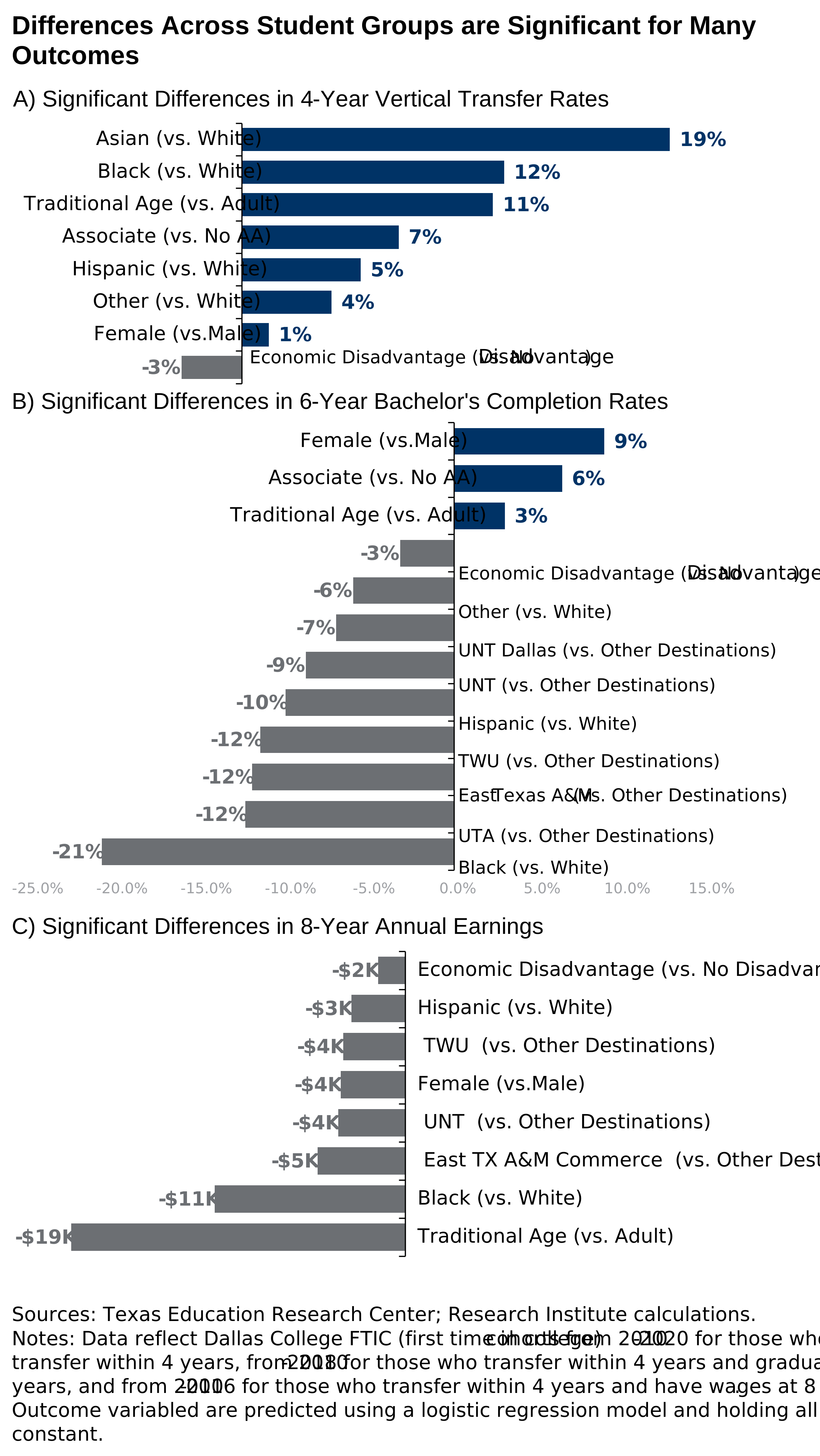
To better understand disparities across student groups, we also conducted a simple gap analysis by comparing model‐predicted outcomes to a defined baseline group for key variables affecting four-year transfer success, six-year bachelor’s completion, and eight-year earnings. Predicted probabilities from logistic regression models were used to examine differences in transfer and bachelor’s completion, while predicted wages (in 2024 dollars) from a general linear regression model were used to assess variation in post-transfer earnings. Predictions for each group of students shown here are calculated while holding all other variables constant. Overall, we find large, significant gaps in transfer rates, bachelor’s completion, and earnings, in some cases rising to 20 percentage points or amounting to thousands of dollars in annual earnings (Figure 6). These disparities warrant reflection. For example, while Black students transfer at a rate 12 percentage points higher than White students (once other factors are controlled for), they finish a bachelor’s degree at a rate 21 percentage points lower post-transfer and go on to earn $11,000 less per year.
Figure 6