
Living Wages and Community College: Dallas College Over the Decades
/prod01/dc1-cdn-pxl/media/dallas-college/content-assets/images/about-dallas-college/research-institute/lw-cover.png)
Navi Dhaliwal and McKenna Griffin
Insight Brief - Published April 29, 2026
Introduction
Dallas College has enrolled more than 3.5 million students since it was founded in 1965. Formerly known as Dallas County Community College District, and now consolidated as Dallas College, the aspiration of the institution has been consistent: to serve and educate students, help them enter thriving careers which contribute to regional prosperity, and—ultimately—transform lives and communities through higher education. In this brief, we explore where past cohorts of these students are now—following their earnings trajectories for up to 30 years—to better understand how their Dallas College education and programs shaped their outcomes over time. With community colleges increasingly charged with strengthening post-college outcomes like employment, earnings, and economic mobility, this analysis establishes a historical baseline to inform Dallas College and its broader community as they advance toward their vision for 2030.
In its updated Living Wage Dashboard, the Research Institute tracked the earnings of more than 750,000 students who exited or graduated from Dallas College between 1992 and 2024, using employment and education records from the Texas Education Research Center. This new tool covers approximately half of all students who enrolled at Dallas College since the 1990s, with noncredit (Continuing Education) coverage beginning in 2001, allowing us to examine wages patterns across cohorts, areas of study, student demographic groups, and credential levels. Using this data, we investigate the percent of Dallas College students who went on to earn a living wage, or the minimum income needed for a person to meet their basic needs, such as food, housing, and transportation. For this brief, we focus on the 2026 living wage from the MIT Living Wage Calculator for a single adult with no children in Dallas County, annualized to $48,485 per year, with all values expressed in Q1 2026 dollars. The dashboard also allows users to select a higher threshold of $65,275; this value is based on the Commit Partnership’s goal for half of all Dallas County adults between age 25 and 34 to earn a one-adult, one-child living wage by 2040.
Sidebox 1: How is a Living Wage Defined?
While this brief focuses on a specific living wage standard, there are many different ways of quantifying a living wage. Estimates of expenses on basic needs like food, healthcare, housing, transportation, and childcare vary from source to source and differ based on family composition and regional cost of living. In preparing the Living Wage Dashboard, we reviewed a range of sources including the Texas Self-Sufficient Wage, the related University of Washington Self-Sufficiency Standard, the federal poverty line, and the ALICE Essentials Index. The two estimates we selected—$48,485 (MIT) and $65,275 (Commit)—together provide both a baseline and aspirational benchmark of what constitutes a living wage.
A challenge across all of these sources is tracking changes in the living wage over time, particularly going back to the 1990s or earlier periods. In this brief, we approach this by adjusting historical wages to Q1 2026 dollars using CPI-U (the Consumer Price Index for All Urban Consumers), then comparing the results to the current MIT living wage standard ($48,485). Because basic-needs categories have inflated faster than the overall CPI-U basket since the 1990s, this method somewhat understates the share of earlier cohorts that met basic needs thresholds at that time, so caution should be taken when making cross-cohort comparisons, especially across decades.
Degrees and Programs Matter
Starting with the earliest Dallas College students captured in our data—the pooled 1992, 1993, and 1994 exit cohorts—we measure median annual earnings within Texas up to 30 years after leaving Dallas College, with the latest data measured in 2024. We separate students based on their highest level of educational attainment, only include those who worked at least three quarters in a given year, and drop anyone who earned below the annual minimum wage for full-time employment; this approach minimizes the inclusion of part-time workers. Self-employment, military service, and out-of-state employment data are also excluded from Texas Workforce Commission records, which serves as the underlying source of in-state employment information. For these earliest cohorts, we find, unsurprisingly, that their earnings have generally risen throughout their careers, eventually plateauing in years 20-30 (Figure 1). The data also depict a clear long-term hierarchy across education levels; students with a bachelor’s degree achieved maximum earnings of around $110,000 per year, those with an associate degree peaked at $92,000, and those with some college education but no credential or transfer reached $82,000. Initial earnings of bachelor’s completers after exiting Dallas College are lower than for other attainment levels because they are often still enrolled in higher education during those initial years. However, within eight years, they exceed the earnings of associate completers. Over the full 30-year timespan, bachelor’s holders accumulated $2.65 million in total earnings, associate holders earned $2.46 million, and those with some college alone earned $2.15 million—all surpassing a 30-year high school diploma estimate of $1.5 million by 40% or more.
Figure 1
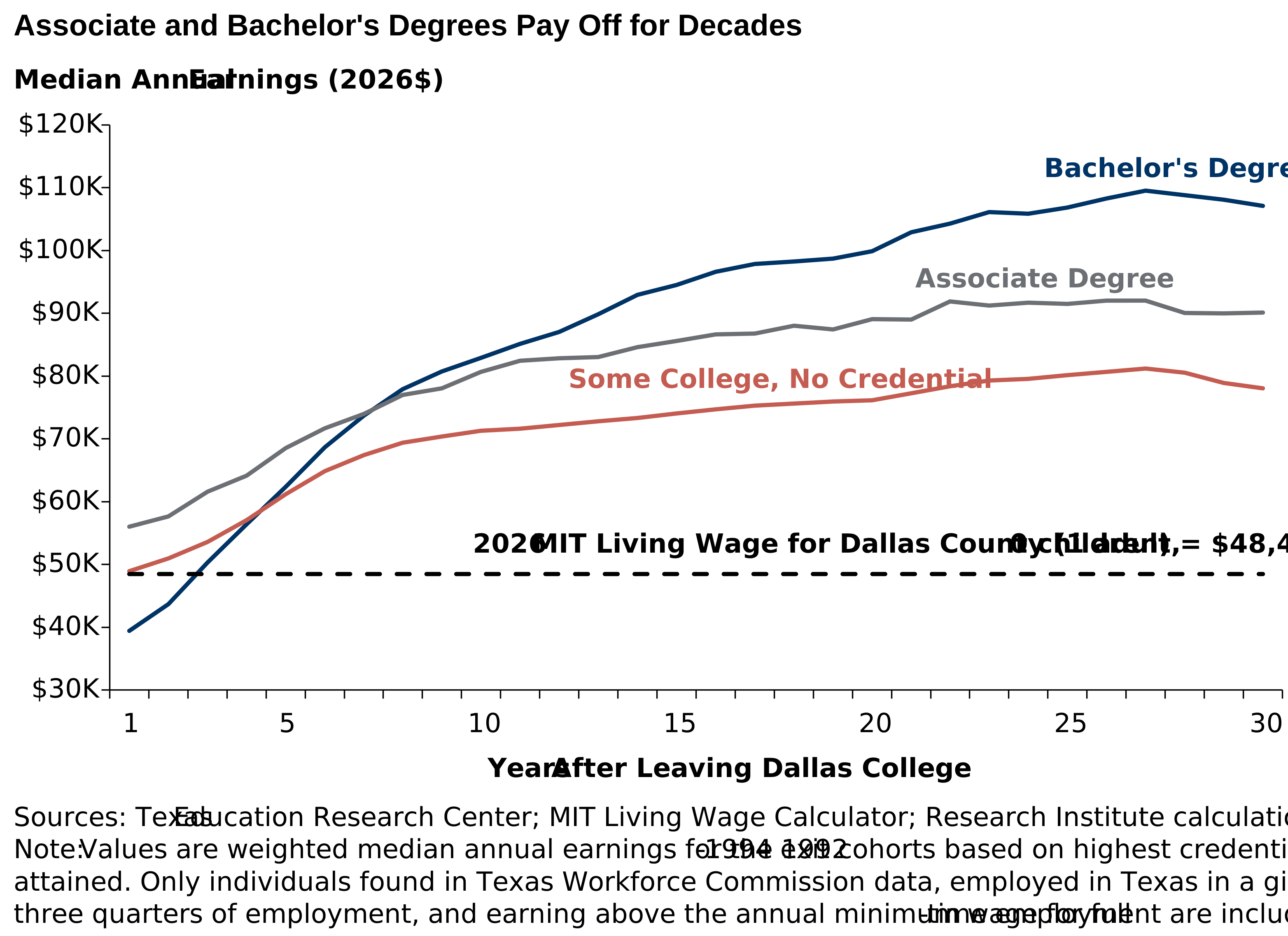 By contemporary standards, these students (the 1992-1994 exit cohorts) were also earning living wages quickly after leaving Dallas College; more than 50% were earning a living wage within three years, with shares rising during their careers to more than 90% for bachelor’s completers, 80% for associate degree holders, and 75% for those with some college education alone. Cohorts from the 2000s and 2010s largely exhibit similar patterns across education levels, with more varied outcomes for certificate holders and students who transfer but do not earn a bachelor’s degree.
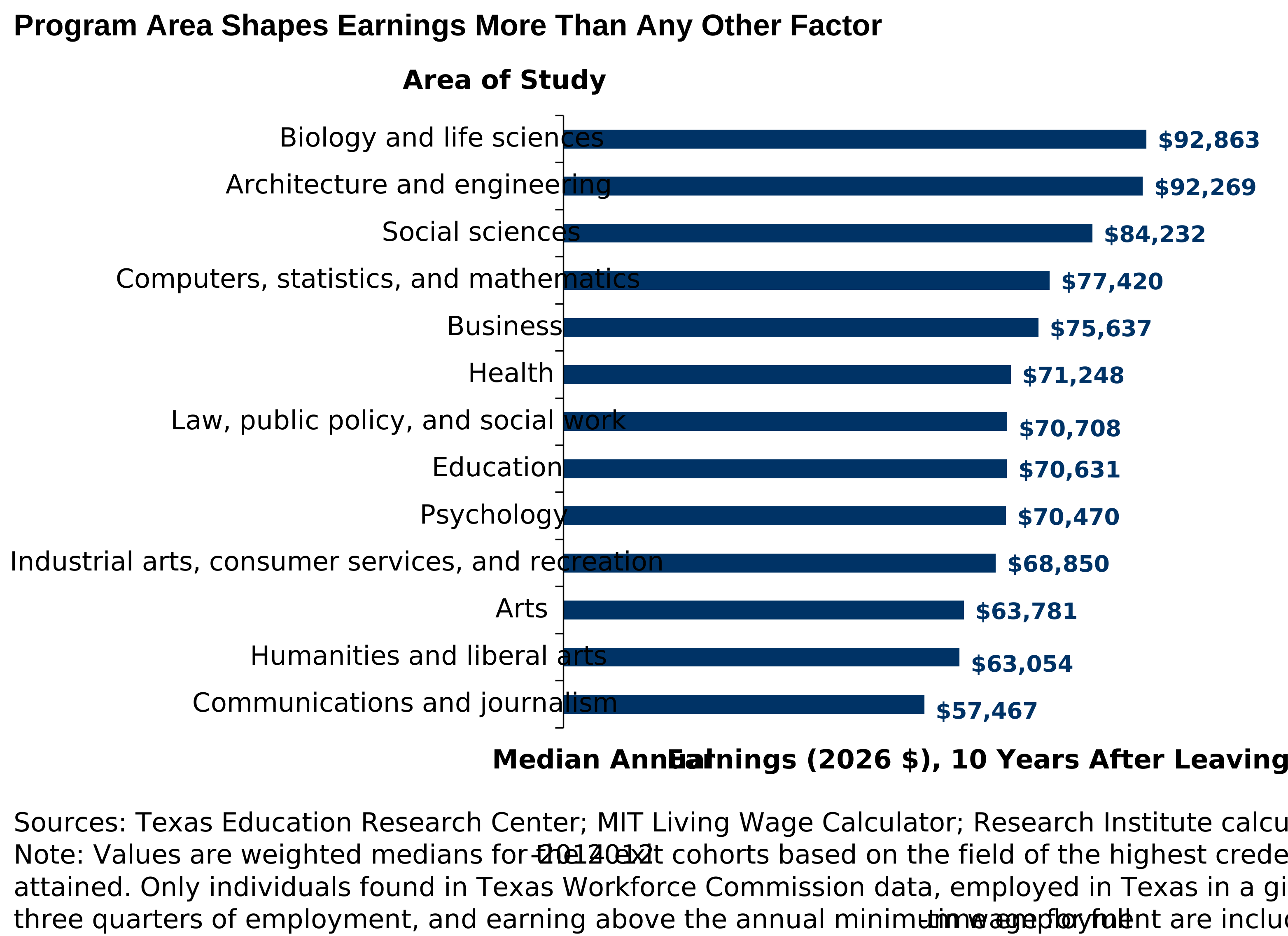
Beyond education level, field of study emerges as a major factor shaping earnings. As an example, we look at the earnings of the pooled 2012, 2013, and 2014 exit cohorts ten years after leaving Dallas College, disaggregated into 15 broad areas of study (Figure 2). The gap between students who majored in the highest-earning area of study (biology and life sciences) and the lowest-earning (communications and journalism) is nearly $40,000 per year. Furthermore, 89% of students majoring in biology and life sciences earned a living wage ten years after leaving Dallas College, while just 62% of those majoring in communications and journalism did. The area of study with the highest enrollment (humanities and liberal arts, which includes the general academic associate of arts and science degrees) saw 68% of students earn a living wage in year ten after Dallas College. This value partly reflects the outcomes of transfer students who did not go on to earn a subsequent credential in another field at the bachelor’s level, since we report the student’s major associated with their highest credential earned.
Figure 2
Demographic Gaps and Credential Completion
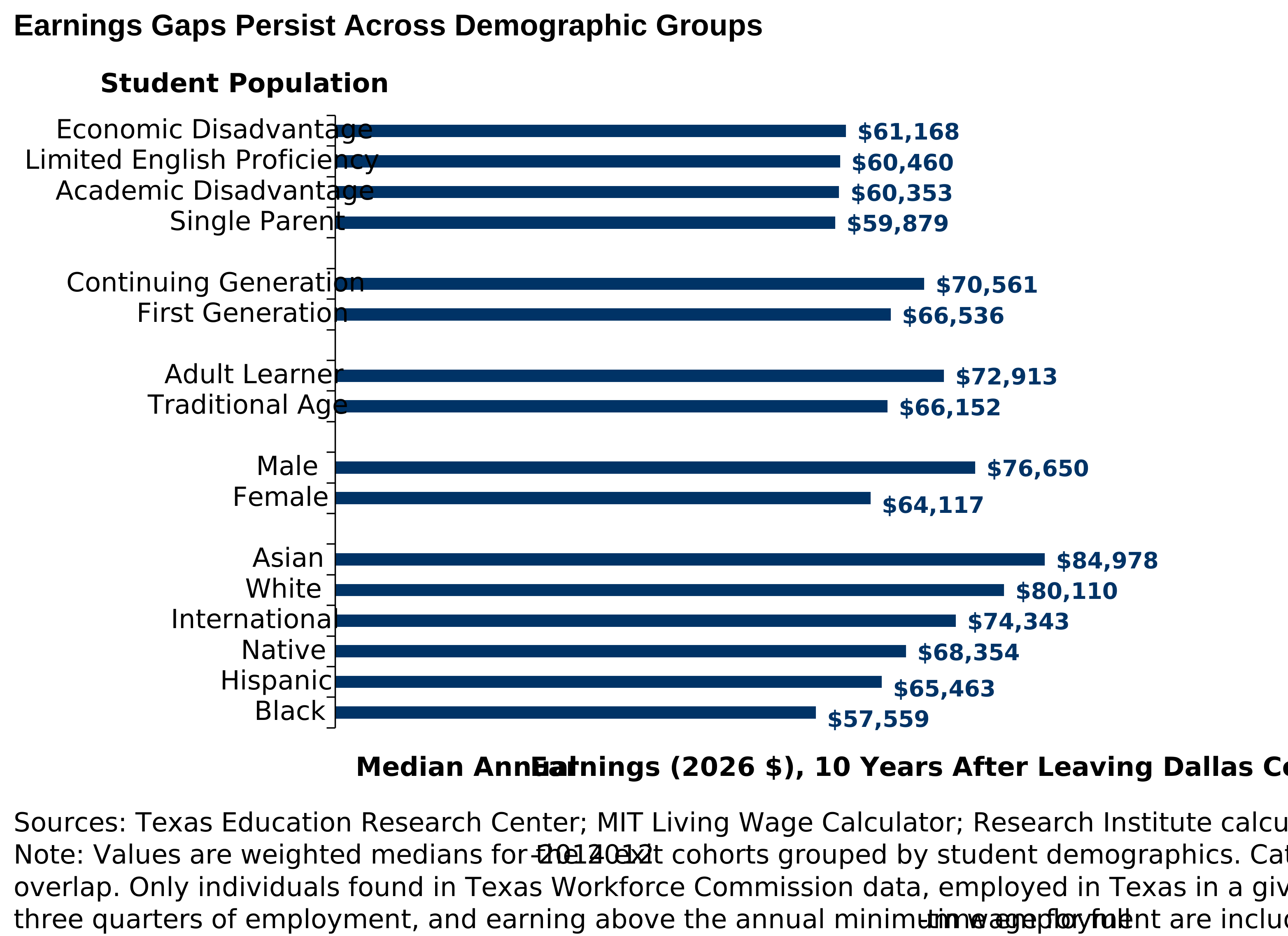
Continuing to examine year-ten earnings for the 2010-2014 cohorts, we also find substantial variation across student demographic groups (Figure 3). Overall, around 73% of students earn a living wage within ten years of exiting, with median earnings of $69,297 in year ten. However, outcomes are stratified by gender, race/ethnicity, age, first generation status, and other factors. For example, male students earn $76,650 vs. $64,117 for female students, black students earn $57,559 vs. $80,110 for white students, and students with academic or economic disadvantages earn $8,000-$9,000 less than the overall median in year ten. These pay gaps shape which student groups earn living wages at higher rates. The largest gap we find in living wage rates is between Black and white students: 62% of Black students earn living wages ten years after exiting compared to 81% of white students. While some variation is expected (e.g., due to student age and prior workforce experience), Dallas College should continue striving to reduce disparities in student labor market outcomes. Encouragingly, we do observe some shrinking in demographic-based gaps over time. For example, while economically disadvantaged students earned about 18% less than the overall population in the mid-1990s, this gap narrowed to around 11% in the mid-2010s.
Figure 3
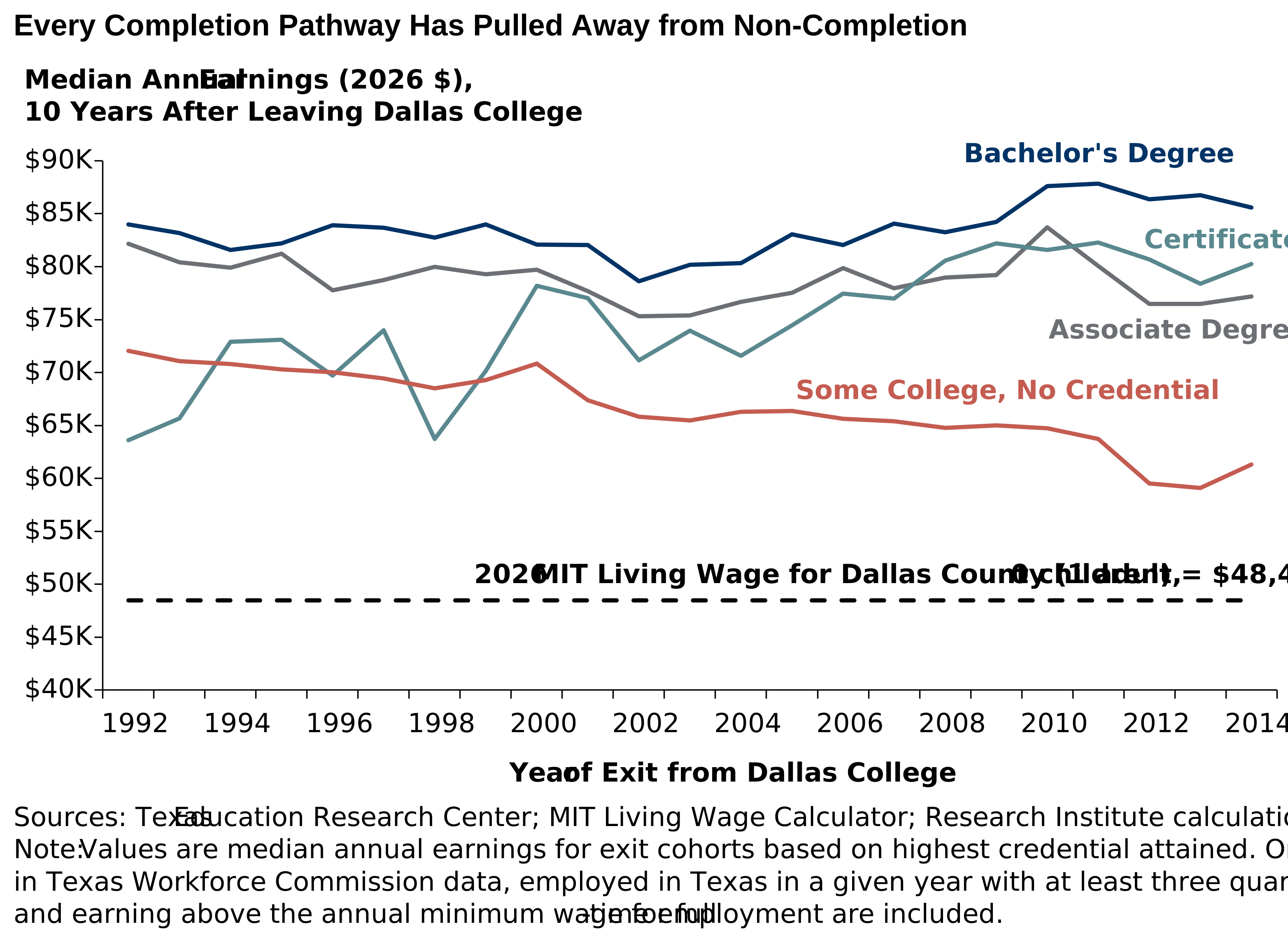
While the earnings data alone cannot identify root causes of these gaps, past research points to differing representation rates in high-demand fields of study and differences in college persistence, completion, and transfer rates as potential contributors. Because of this, the same policies and practices used to encourage underrepresented student groups to enter high-demand fields and to increase student retention and graduation rates could also serve as valuable levers in increasing post-college earnings. Completion of any award also appears to have taken on increased importance cohort-by-cohort. Tracking the year-ten earnings of students from the 1992 to the 2014 exit cohorts, the earnings premium associated with credential completion has risen relative to students who enrolled but neither finished a credential nor transferred (Figure 4). For example, for cohorts who exited in the early to mid-1990s, bachelor’s holders earned around $12,000 more in year ten than those with some college alone; by the early to mid-2010s, this gap had risen to $25,000. Similarly, associate holders went from a $9,000 premium over some college to a $17,000 one over this same stretch, with certificate holders showing the largest change—going from a $1,900 deficit relative to the some-college population to around a $19,000 surplus. The evolving composition of available certificates over time, including an increased share of noncredit offerings aimed at supporting adult learners, likely contributes to this change. Yet the completion premium is also widening even for bachelor’s and associate degrees, not just certificates.
Figure 4
The Student Body is Changing
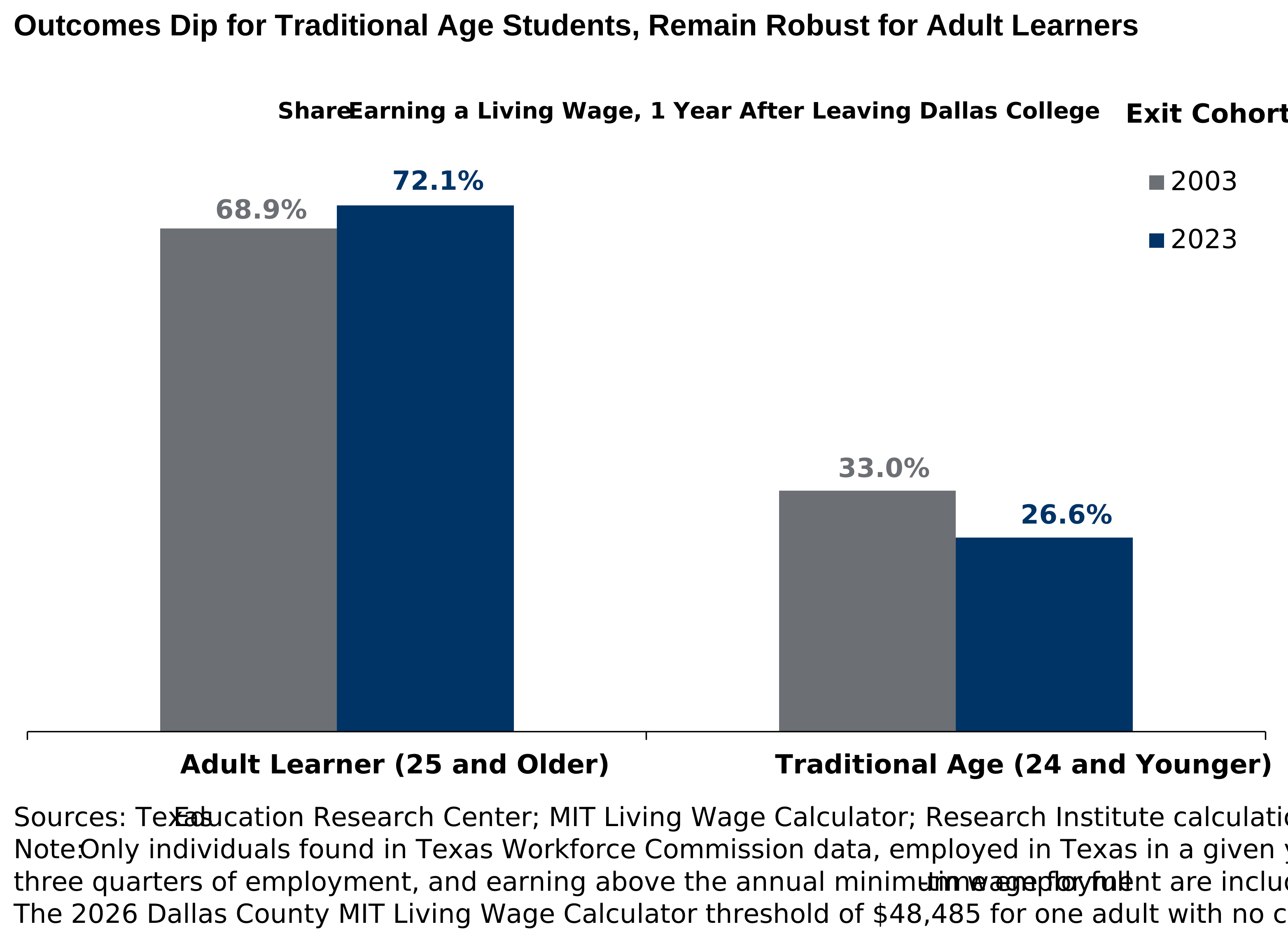
At a glance, fewer students in recent cohorts (2015 onward) are earning a living wage in the first few years after exiting Dallas College than in past decades. Recent cohorts have faced real headwinds, including disruption from the COVID-19 pandemic, rapid technological change, and a more polarized labor market with narrowing entry-level opportunities and fewer reliable middle-skill pathways that do not require a bachelor’s degree. However, at Dallas College, the decline also has a more straightforward explanation: the student population is much younger than it used to be. The share of traditional-age students under 25 has risen, and those students are younger on average, with dual-enrolled high school students now making up nearly one-third of total enrollment. As the share of younger students has grown, the overall rate of living wage attainment one year after exit has fallen (Figure 5). This pattern is expected, since younger workers with fewer years of employment experience tend to earn less in the labor market. Holding the age mix constant, however, overall outcomes are virtually unchanged from two decades ago, when more than half of exiting students earned a living wage in year one. Factoring in age, the shift is this: adult learners have gained ground, while outcomes for a larger and younger traditional-age population have weakened (Figure 6).
Figure 5
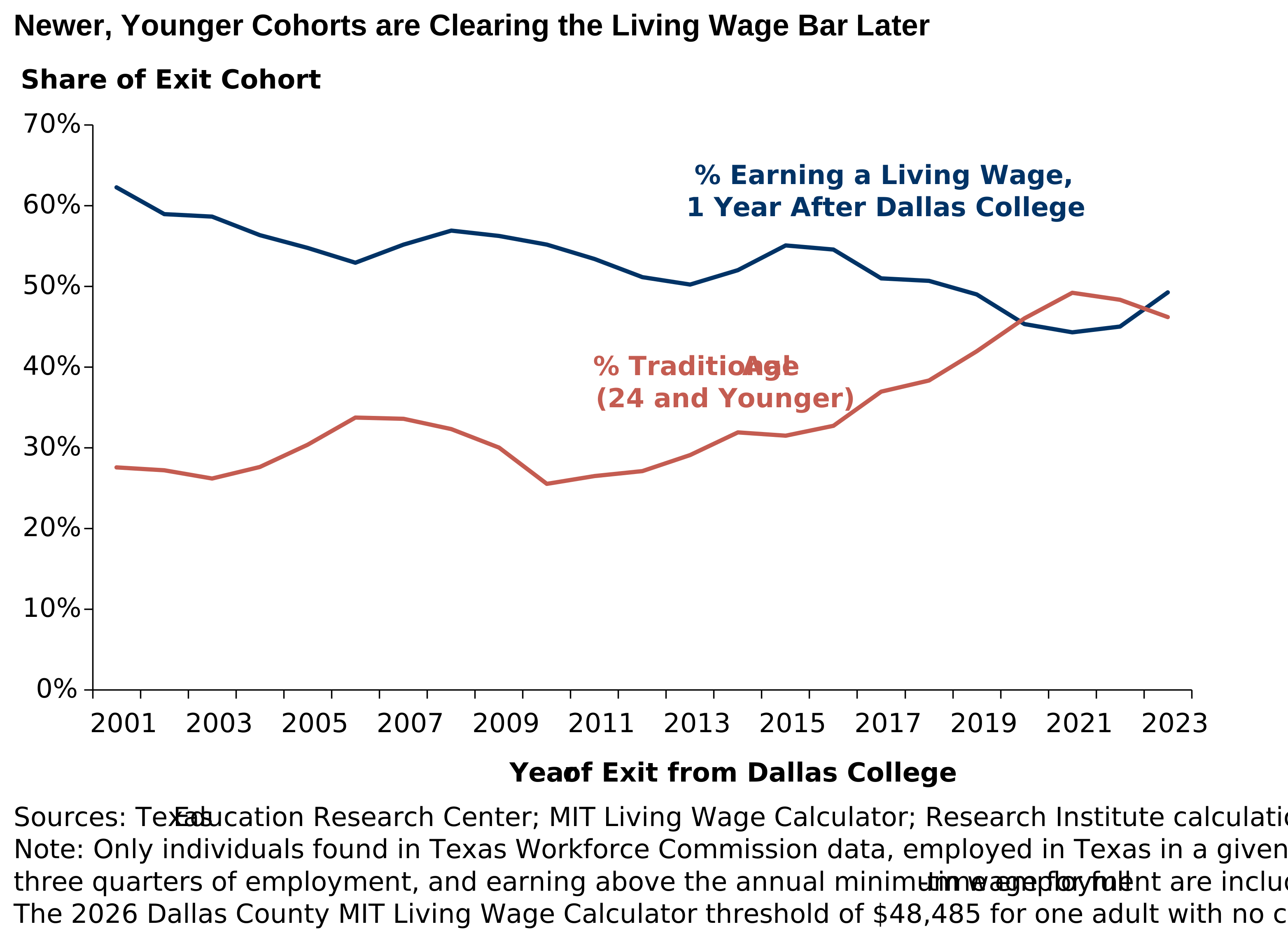
Figure 6
The changing demographics of Dallas College raise a deeper question: how should the College evolve its approach to defining post-college success? The MIT standard of $48,485 per year is the minimum amount needed to support the basic needs of a single adult with no children, while the Commit standard of $65,275 applies to adults age 25 to 34 and is framed as a one-adult, one-child threshold. Increasingly, community college learners do not fit into a single archetype. Single parents need higher thresholds to cover rising childcare costs. Younger students who live with parents may spend less on housing, splitting expenses among three or more working adults in intergenerational households. In First Destination Survey data, more than one third of recent Dallas College graduates indicate that they will work multiple jobs, sometimes in gig roles, where wage data are not always captured by state administrative records. These nuances complicate the decision of how the College should define post-college economic success.
Conclusion
This brief explores how a Dallas Colleges education shapes the life trajectories of its students. Using data spanning more than three decades, we find that degrees from Dallas College have paid off meaningfully over the median student’s career—amounting to nearly $1 million more in cumulative earnings than a high school diploma alone. Area of study emerges as the single largest determinant of annual earnings, with year-ten pay ranging from $57,000 to $93,000 across fields. Demographic gaps persist, with historically underrepresented and disadvantaged student populations trailing the institutional average. And the earnings premium associated with credential completion has widened steadily across cohorts, making completion an increasingly decisive factor in students’ long-term economic outcomes.
At the same time, the student body and economic conditions may be changing faster than any single living-wage threshold can describe: more dual-credit high schoolers, more adult learners balancing work, family care, and school, and more households where a one-adult income benchmark may be the wrong yardstick, all entering into a very different labor market than in decades past. Administrative earnings data chronicle where Dallas College has been, but they are only part of the story. In our latest annual Career and Transfer Outcomes Report, more than 85% of Dallas College graduates reported agreeing or strongly agreeing that their education was worth the costs, that they were prepared for their next steps, and that they were satisfied with their initial post-college plans—a figure well above what any wage threshold alone would suggest. As the College advances its 2030 vision, the most important work ahead may be less about refining any single indicator, but more about thinking carefully, and broadly, about what long-term success should mean for the varied and diverse student body that Dallas College serves—not just in the past, but for the next decades to come.