
Busy Schedule, Tight Budget? You can Still Eat Healthy
/prod01/dc1-cdn-pxl/media/dallas-college/content-assets/images/news/2026/Feature-900X600-2025-RL-FoodPantry-03.jpg)
Feb. 3, 2026
This time of year, a lot of us are thinking about eating better and feeling healthier. Between classes, work and social life, eating healthy can feel expensive and unrealistic. According to Carl Miller, department chair of Culinary, Pastry and Hospitality at Dallas College, it doesn’t have to be.
“It does take some effort,” Miller said. “But the $15 you might spend on one fast-food meal could easily turn into five or six meals if you cook for yourself.”
What Is a Healthy Diet?
The World Health Organization recommends eating a variety of whole unprocessed foods every day,
 including plenty of vegetables and fruit, and limiting foods high in fat, sugar and salt. Fast food, junk food and heavily processed foods may be convenient, but they quickly derail your health goals.
Miller also points out that how your food is prepared matters. While you may crave the flavor and texture of deep-fried foods, this cooking method adds extra fat and calories. Boiling vegetables can cause nutrients to be lost in the water, while steaming, roasting and sautéing help preserve them.
Eating well isn’t just about physical health — it can affect your studies too. “Your cognitive abilities diminish when you are not nourishing your body properly,” said Miller, stressing the importance of eating a healthy breakfast.
“You’ve been asleep for eight hours, so when you wake up your body is low on energy and you need to replenish it,” he explained.
A nutritious breakfast doesn’t have to be complicated. He recommends fruit, a complex carbohydrate (like oats or whole wheat toast) and a protein (eggs, yogurt or nut butter).
Get Help at Dallas College Food Pantries
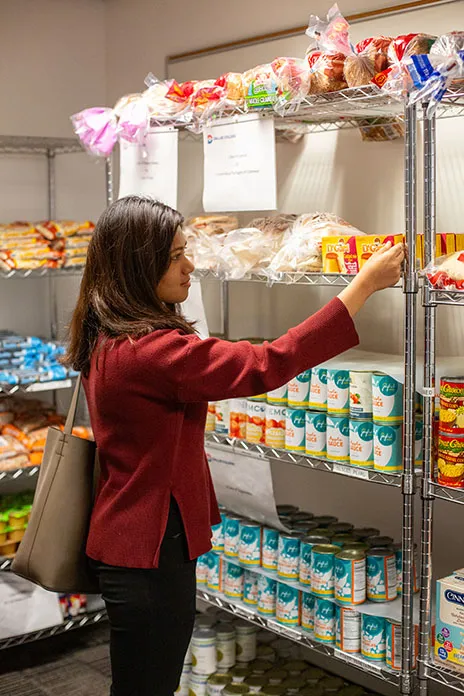
 If your food budget is coming up short, visit a Dallas College food pantry to supplement your food shopping. Miller encourages students to use them without hesitation.
“This is a hand-up, not a handout,” he said. “They are a resource available to allow you to focus on classes, work and whatever else is on your plate.”
Plan Your Meals
Planning ahead is one of the easiest ways to save money and eat better. Miller suggests planning your meals for the week and shopping with a list. This helps you avoid impulse buys and focus on getting the best deals.
Money-Saving Tips:
- Compare unit pricing and choose store brands when possible.
- Stock up on staples like beans, rice, oats and canned tomatoes when they are on sale.
- Buy fresh budget-friendly vegetables when they are in season: cabbage, carrots, potatoes, broccoli and zucchini.
- Don’t overlook frozen fruits and vegetables. They last longer and are easier to prepare. Frozen produce is often picked at the peak of ripeness and higher in nutrients.
- Look for affordable protein sources: dried beans, lentils, chickpeas and eggs.
- Buy larger, more cost-effective packages of chicken or meat, divide them into meal-size portions and freeze.
Select a less busy time during your week to cook. Preparing meals in advance and freezing them can save money and reduce stress on busy days.
Helpful Resources for Meal Planning
If you’re not sure where to begin with meal planning, these free resources can help:
- HappyFork.com — Analyzes meals and tracks nutritional information.
- Fitday.com — Tracks eating habits and activity to support a healthier lifestyle.
- Allrecipes.com — Provides recipes, how-to videos and nutritional information.
- North Texas Food Bank — Offers simple, nutritious and affordable recipes.
Be Kind to Yourself
Start small. Eating healthy on a budget isn’t perfect. Start with one or two small changes to your diet. Stay healthy by using all the resources available to you as a Dallas College student.
And don’t forget — fueling your body also fuels your mind.
- Resources
/prod01/dc1-cdn-pxl/media/dallas-college/content-assets/images/events/health-services-and-promotion/WWMC.jpg)
/prod01/dc1-cdn-pxl/media/dallas-college/content-assets/images/news/2026/VITA-thumbnail.jpg)
/prod01/dc1-cdn-pxl/media/dallas-college/content-assets/images/news/2026/childcare_thumbnail.jpg)
/prod01/dc1-cdn-pxl/media/dallas-college/content-assets/images/news/2026/SCN-Barrier-Busting-Thumbnail.jpg)